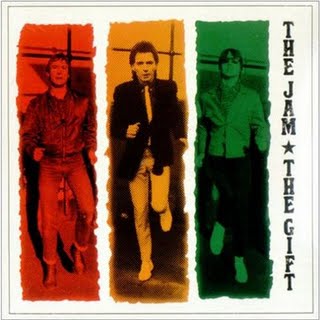
The Jam's Final Studio Album Was Issued In 1982. It Was Named "The Gift".
The Gift was to be the final Studio album cut by The Jam, and it simply showcases how Weller ambitions had massively outgrown the band. In places it sounds like a Style Council record that has Foxton and Buckler looking over their shoulders and glancing at the spots their musical ideas where when they began. Because they had little to contribute by this point. It is not necessarily their fault – Weller has come up with some textures and grooves that are totally un-Jam like, in the same way that Pete Townshend brought along influences for the recording of The Who’s “Who Are You” that left many band members (especially Keith Moon) stranded. When that happens, a band takes its last bows and walks offstage.
These style excursions that do not work include “The Planner’s Dreams Go Wrong” and “Circus”, while “Running On The Spot” has potential that is never realized. Still, some compositions do work out to a lesser or bigger extent – “Precious” is quite effective, and the monster hit “Town Called Malice” gave everybody high hopes for the album (it was released some time ahead of the record, coupled with “Precious”). For its part, the soulful title track falls somewhere in the middle. Continue reading →
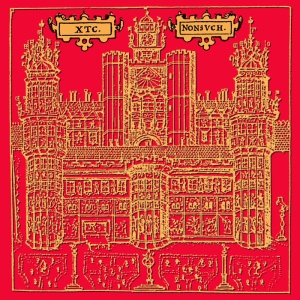
Nonsuch is a quintessential XTC album in all the good and bad aspects. It is an elegant and refined collection that engages our brains and lifts shadows off our dreams (IE the good aspects), and it is also an album that fared abysmally when released (IE the bad aspect). The good aspects are a merit of the band, and the bad aspect that was mentioned is attributable to the buying public and its limited sight. What makes it all the more aggravating is that the album is nothing short of masterful, and its mastery is nothing short of awe-inspiring. John Alroy cites Andy’s poetic skills, and it is hard to disagree with that. But it must be mentioned that Colin does not necessarily lag behind here – alright, a song like “The Smartest Monkey” could do with a better lyric, but the rest are up there with his best work: “My Bird Performs” is a great “happy with my lot” song, and “Bungalow” is amazing in the way it grows. While my favorite songs of his are the ones found within “Oranges & Lemons“, you can count Nonsuch as the second best.
Andy’s best moments here include “Rook” (a song he has defined as his most personal ever), the gorgeous “Wrapped In Grey” (a fitting epitaph for the band in hindsight) and “Then She Appeared”, a composition that employ an alliterative title to excellent effect.
The album opens with the MTV-popular “The Ballad Of Peter Pumpkinhead”, a song that some of you might also be familiar with since it was covered by the Crash Test Dummies for the movie “Dumb & Dumber”. They did it satisfactorily enough, and in case you are yet to sample XTC’s version here is the video:
Besides, the CD includes the mildly-successful “Dear Madam Barnum” (yet another character sketch, and yet another compelling one) and “The Disappointed” (which was chosen as a single). “The Disappointed” in particular is a very refined song, and if the album did not include “Wrapped In Grey” it would be the record’s definitive lyrical high point.
The album’s closer is “Books Are Burning”. The song is not necessarily hailed as one of Andy’s best moments on record. I think the problem arises from the stellar company that it has in Nonsuch, and from the somehow plain sentiment it conveys – “books are burning/and you know where they burn books people are next”. Personally, I find it a good idea to paint with more colors than one. A song like “The Disappointed” is great, but if you were to apply the same approach time after time it would end up being grating. A direct outlook is more thought-provoking than the long way around when it comes to most people, and I am sure Andy knew that. Continue reading →
This is Part 2 of the review. Head here for Part 1.
Colin’s contributions to XTC’s 1989 album come in the shape of “King For A Day”, “One Of The Millions” and “Cynical Days”. I must say that – in my opinion – he had never made such a sparkling contribution to an XTC album. “Skylarking” comes pretty close, but if I were hard pressed I would go for “Oranges & Lemons”. It seems to me that the pressure they all underwent during the “Skylarking” sessions enabled Colin to come up with songs he would have kept to himself otherwise. It is as if some barriers had been taken down, and this is specially true of the song “One Of The Millions” – “I never seem to do anything”, “I won’t rock the boat ’cause I’m scared what might happen”… If he is not speaking to his band mates, he is clearly speaking to himself.
A song which was virtually rewritten for the album was “Merely A Man”. Producer Paul Fox did really like the demo, but it turned out that Andy had written the tune as a wind-up for some music biz executives. Not to let their new (and young) producer down, he rewrote the lyrics and the song ended up being a standout, if only because of Dave’s thundering performance. Continue reading →
This was the first XTC album I set my hands on. I bought it used but in mint condition for a completely ridiculous amount of money, something like the equivalent to USD 2. Talk about bargains. Looking back, I can honestly say that this was the perfect introduction I could have had to these impassioned artistic rockers. The album has my favorite XTC song overall (“The Mayor Of Simpleton”), and that song in particular and the album on the whole made me pick up the craft of writing lyrics. I don’t think there is a better indicator of the transcendence a piece of art can have than that.
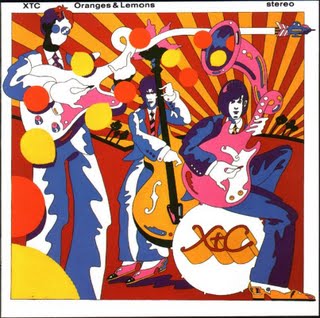
The record has 15 songs, and in more than a couple of instances it resembles the Dukes more than fleetingly. That is true not only when it comes to compositions like “Garden Of Earthly Delights” but also to the cover art, a happy 60s pastiche that once again showcase Andy’s visual skills.
Three singles were culled from the album: “The Mayor Of Simpleton”, “King For A Day” and “The Loving”. More importantly (and maybe even more uplifting for us fans), the band hit the road again to promote the album. But it is not that they “toured” in a conventional sense. Rather, they did several live radio shows to promote the album. They even played one with an audience of about 250 people, and everybody remarked how much Andy enjoyed it. Good for him. Those of us who are fond of the band admire him as an artist but dearly care for him as a person, and it must have been a touching moment for everybody who was there that day. Continue reading →
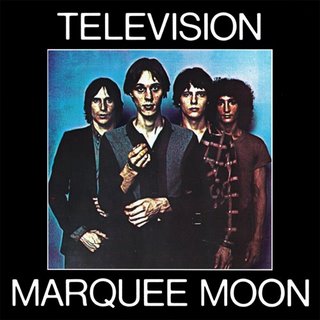
"Marquee Moon" Is Often Deemed As One Of The Best Debuts In History
“I can think of many ways to silence somebody who questions the creativity at play at the tail end of the ‘70s. However, the most resounding and unforgettable one is spinning Marquee Moon. The record holds such an intricacy and an intellectual depth that it won’t come across as an act of defiance to the one who claimed otherwise. Any song on the album makes it clear what happens when imagination meets expressivity. It is art that closes every distance which could separate a music lover from another. And I think it is the most beautiful musical testament from the year 1977. Of course, other bands left marks which might be more noticeable and (in certain senses and places) more compelling and far, far more enjoyable. But still waters run deep. And will do so forever.”
That is what I wrote yesterday about “Marquee Moon”, when I was introducing Television and I tried to explain the actual transcendence of the band. That single paragraph says everything that could be said about one of the most precious debuts in history. I don’t know what could be added to it, but common sense and fairness dictate making at least a brief mention of the tracks to be found therein.
The record starts with the alert “See No Evil” and closes 45 minutes later with “Torn Curtain”. In that lapse of time you partake in the most delirious guitar crossfire you can probably listen to anyplace. The title track is of course the better-known example (it was released as a single in an edited version), but songs like “Friction”, “Elevation” and “Prove It” act as equally forceful and exquisite reminders of the interplay which characterized the band. And the closing number has one of the most satisfying moments I have ever found on record. I am talking about the final verse, in which the guitar doubles the voice and the notes eerily extend each syllable that is pronounced. It is a gorgeous moment, and the strongest gesture in which to close an album that was to redefine aural foregrounds and backgrounds in rock and roll for ever. Continue reading →
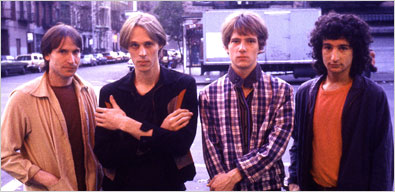
Televison Was Conformed By Fred Smith, Tom Verlaine, Richard Lloyd & Billy Ficca
I think the late ‘70s were the final stronghold of true creativity in the history of music. And to me, few bands encapsulate that brilliance of thought and execution like Television.
The band was formed by two guitar players who had poetic aspirations. They went by the names of Tom Verlaine and Richard Lloyd. The two friends had a real connection that time and again would let them elaborate intertwined guitar parts in which both instruments were playing a recognizable lead. They were to be backed by drummer Bill Ficca and bassist Fred Smith. And in addition to being the principal tunesmith, Verlaine was also going to assume lead vocal duties.
Despite being one of the first bands to gain notoriety for its live shows within the pre-punk American scene, Television was to be one of the latest to release an album. When it did finally materialize, though, it was worth the wait. “Marquee Moon” included the incendiary live track and seven other songs that were to act as a blueprint to many of the most successful bands of the ‘80s and beyond. Their second album (“Adventure”) followed shortly, and it showed a more experimental side to them. It was deemed as a good album, but the first one was (and is) held in more esteem. However, neither album met with strong sales in the United States, and Television disbanded after touring to promote “Adventure”. Continue reading →
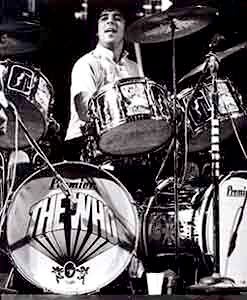
Keith Moon Playing The "Pictures Of Lily" Drum Kit
Was there ever a band in which each individual member was more irreplaceable than The Who? I frankly don’t think so. As such, their decision to carry on when Keith Moon died in 1978 must stand as one of the most debatable in the history of rock & roll. People often claim they did it for the money, and that was it. But there were a couple of aspects which should not be dismissed out of hand.
First thing first – by that point The Who were far more than 4 friends who gathered together to play on weekends. They employed more than 40 individuals on the whole. They had a recording studio, a fleet of trucks, their endless roadies… They were not exactly a corporation, but they were quite close. If they had disbanded then, that would have been a considerable number of people on the dole again.
A parallel is drawn with John Bonham’s death in 1980. When that happened, Zeppelin disbanded immediately. Pete Townshed said there was no comparison – Zeppelin was in a very active schedule when that happened, whereas The Who were semi-dormant. But it is clear that The Who might have come across as betrayers more markedly because of Zeppelin’s decision. Continue reading →
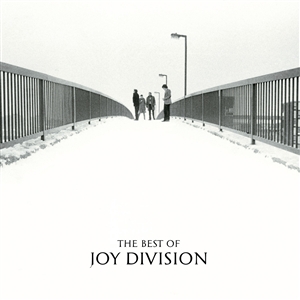
Released in 2008, this is an excellent compilation. But to get the main niggle out of the way once and for all: Joy Division was to release an EP and 2 LPs in the years they were together. The 2 albums fit one CD easily, so that coming up with a “Best Of” album which has about 50 minutes of music is always going to be objected to by many. In this particular case, the compilers made the blunder of including an instrumental track (“Incubation”) that is extraneous to the usual spark of the band, which was dependent on Curtis delivery both in terms of content and form.
There, that was the only negative thing that could be said about this anthology. Because the cuts that did make it to the CD are among Joy Division’s finest compositions, conveying in equal measure the palpitating rage and frustration that lay behind Curtis haunted glance, and the melodically ferocious approach of the band. Starting with “Digital” (one of the most delectable paranoid tirades I ever listened to) and ending with “Isolation”, the album is a perfect snapshot of what made the band so unique and (above all) so influential for generations to come.
The first three numbers in particular work like nothing else, as “Digital” is followed by “Disorder” and “Shadowplay”, two emblematic Joy Division songs. The album also includes the hit “Love Will Tear Us Apart”, “Heart & Soul”, the maniac “She’s Lost Control” and a song that makes me think of Costello’s “Radio, Radio”, only that the approach is obviously far removed. The song is called “Transmission”, and while Costello’s number deals with the way the industry dominates the airwaves, Curtis’ song takes a more personal way through and showcases the effect of what is played, not the role of the ones who decide what does get played. Continue reading →
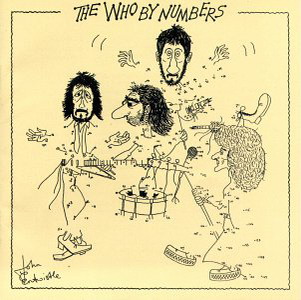
John Entwistle Drew The Cartoon. Try Connecting The Dots - It Works!
In the ’70s, music was characterized by an inner conflict that tore at ideals and hurled them against the blackest confines of the human psyche. As a seeker of truth, Pete Townshend surely would have a lot to say. The Who was always – always – there in times of need. The album The Who were to release after Quadrophenia was to expose Pete’s vulnerabilities like nothing else. It was him who needed someone. And the horrible realization that he was not finding that person or people within his band was what listeners were to come across on “The Who By Numbers”.
The setting in which the album was conceived was as troublesome as the ones in which “Who’s Next” and “Quadrophenia” came to the world. This time, Roger and Pete were playing verbal ping pong on the press, and their views on The Who (as entertainers and as artists) were never painted in such black and white terms before or since.
Pete’s already-manifested impression that the band was caricaturing itself had entrenched by this point. His new set of songs dealt with that in a tortured way. The one jovial tune on offer was to be “Squeeze Box”. It was to become a Top 20 hit, in fact. That was certainly disheartening – something truly akin to another brick in the wall of vacuity.
A sense of futility populates the album: Pete questions the relationships with his fans and friends at every turn, and the facades he always studied were becoming far, far too brittle. Everybody could see through disguises by this point. Continue reading →
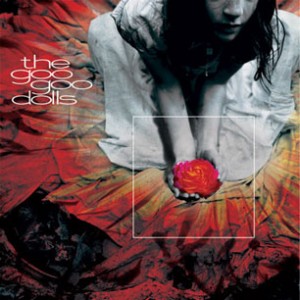
“Gutterflower” was to be the first album the Goo Goo Dolls released after the acclaimed “Dizzy Up The Girl”, the CD that gave us “Iris” and “Slide”. This time around the tone is much starker because John Rzeznik was going through a divorce, and broken sentiments surface at every turn. Leaving aside these songs about disillusionment and loyalty lost, there are two songs that describe the way he felt when moving from Buffalo to LA. They are the single “Big Machine” and “What A Scene”.
The other singles were to include “Here Is Gone”, the closest to the hit formula they had established in the previous record, and “Sympathy”. “Sympathy” is one of the few all-acoustic songs that they were to release as a single, and it is equally enticing on the album as it is when listened to on its own. The song treats disenchantment like the remaining tunes within the album, wondering in which measure the failure of a relationship is down to each person. The conclusion seems to be that both are equally to blame, yet they are incapable of admitting it. Nietzsche used to say that the one who loves the most is the most damaging person since he or she tends to request impossible thing from his/her loved one at every turn. And the majority of songs on offer here (“Think About Me”, “What Do You Want”, “Truth Is A Whisper”) do nothing but bring that to mind time and again.
On the other hand, Robby offers up 4 songs. They mostly reinforce the overall mood of the album (“You Never Know”), yet he also contributes the uplifting “Up, Up, Up” and “Smash”. But on the whole, the album feels like Johnny’s show. Robby songs are also shorter, and it is John the one who closes the album with “Truth Is A Whisper”. Continue reading →