London Calling (The Clash) – Album Review

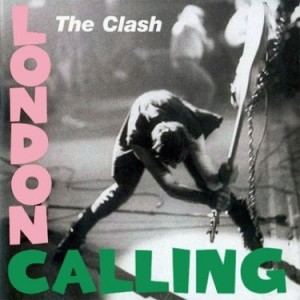
London Calling's Cover Was Shot By Pennie Smith. The Photo Would Eventually Be Voted The Best Rock & Roll Image Ever By Q Magazine.

London Calling's Cover Was Shot By Pennie Smith. The Photo Would Eventually Be Voted The Best Rock & Roll Image Ever By Q Magazine.

A single, seemingly innocuous event might modify the way people approach something forever.That is something nobody could avoid thinking when reviewing “London Calling”, The Clash’s third album. As everybody knows, this album was named the greatest record of the ’80s by Rolling Stone magazine. That is all the more interesting if only because it came out in 1979, not 1980. But that is a different story…

The fact is that there are many people who swear by it owing to that. That couldn’t be avoided, but fans of The Clash are constantly irked by such a situation. It gives their best-loved band popularity alright, but not the kind of popularity that could conduce to a critical analysis of their music and its true merits.

And the music found on London Calling deserves as much of an objective overview as possible. The album (which was a two-record set that retailed at the price of one) marked the moment The Clash started experimenting and letting in more influences into their basic sound.

In actuality, there is only one “punk” song, and that is the title track. It is a masterpiece of sustained tension – the bass is apocalyptic, the guitars emulate a siren near the end, Joe wails his head off… It is one of their better-known songs, and deservedly so. Continue reading
Sound Affects (The Jam) – Album Review

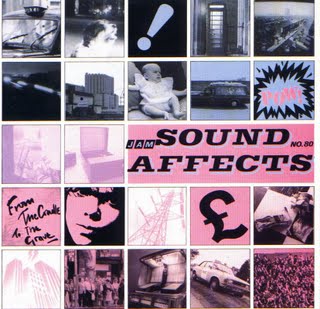
In Theory, Each Panel Is Related To A Lyric On The Album

In Theory, Each Panel Is Related To A Lyric On The Album

During their brief time together, Paul Weller & Co. were to release 6 albums of original compositions. Three are traditionally regarded as representing their pinnacle. They are “All Mod Cons“, “Setting Sons” and “Sound Affects”. Out of the three, “Sound Affects” is the one I like the least. Here, they sound more like The Beatles than The Kinks or The Who, two bands that had been the predominant influence until then. As the critics aptly insinuated, Sound Affects stands as The Jam’s “Revolver”.

The album bore The Jam’s second chart topper – the song is named “Start”, it was inspired by Orwell’s “Omage To Catalogna”, and the bass part has been taken on permanent loan from The Fab Four’s “Taxman”.

The other major hit the album features is “That’s Entertainment”. The song was issued as a single only in Germany, and it is still the best-selling import single within the United Kingdom. Continue reading

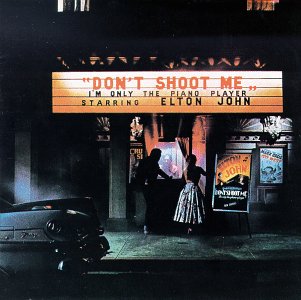
Don’t Shoot Me I’m Only The Piano Player (Elton John) – Album Review

The Album Is Named After A Remark Elton Made To Comedian Groucho Marx During A Show.

The Album Is Named After A Remark Elton Made To Comedian Groucho Marx During A Show.

This was my first Elton John album. I bought it on the strength of “Daniel”, a song I had always been moved by. I admit that even back then, when I had no other albums of his, I had certain a feeling when I listened to it… a sort of hunch that told me “this guy can do better”. And now, having listened to Elton’s output both sides of it, I am sad to say that the record is not only average at best, but it is also the point where his work became saccharine for all the wrong reasons.

To me, “Don’t Shoot Me…” marks the instance where singles began having priority over albums within Elton’s career. The problem was somehow more evident in forthcoming ’70s albums like “Goodbye Yellow Brick Road”, and the ’80s were characterized by such an issue, of course.

Of course, the two A-sides here are so monumental that everything is forgiven for a minute. In addition to “Daniel” (a top 5 hit) we have “Crocodile Rock”, Elton’s first chart topper and a song where the farcical element that many saddle Elton with is put to the best possible use. Continue reading

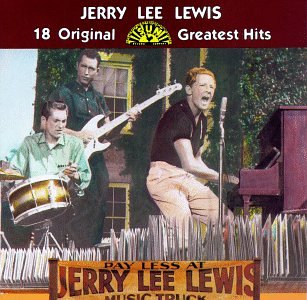
18 Original Sun Greatest Hits (Jerry Lee Lewis) – Compilation Album

The Killer In Action

The Killer In Action

If we were to look for a bigger hellraiser in the annals of Rock & Roll than Jerry Lee Lewis the search would never end. And if we were to look for an exuberant instrumentalist in the decade of the ’50s, the search would start and end at the Killer’s fingers. Much like Keith Moon, his personality and temperament were what turned him into a matchless musician. This compilation gathers together the singles and noteworthy tracks he put under the Sun label at the beginning of his career. That was when he saw some serious chart action, too, so a case can definitely be made that if you were to have just a Jerry Lee album this is it.

The tracks on offer include “Great Balls Of Fire”, “Whola Lotta Shakin’ Going On”, “Wild One”, “Breathless” and the theme tune from the movie “High School Confidential”. Also featured is the song that was to be his final hit, a cover of Ray Charles “What I’d Say”. All these are good, enjoyable songs that provide us with a true blueprint for every rock and roller that was to make the piano his predominant instrument. Conversely, there are covers of “When The Saints Come Marchin’ In”, “Matchbox” and “Jambalaya” that are not very enticing on record. Whether they worked better live is besides the point – here, they don’t deliver. Continue reading

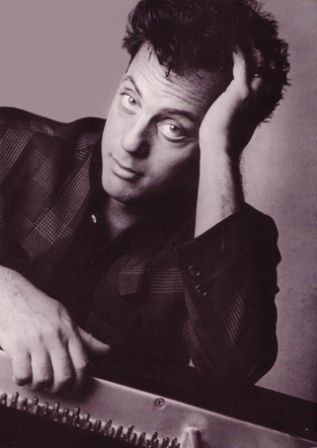
Billy Joel – General Introduction

Sing Us A Song, You're The Piano Man

Sing Us A Song, You're The Piano Man

I discovered Billy Joel through his connection with Sir Elton John. Obviously, I had been on very good terms with songs like “Piano Man” and “Uptown Girl” long before I ever bought my fist Billy Joel record, and I recall that the one song of his that had me buying that album (a compilation) was “She’s Always A Woman”. I know the Elton/Billy comparison is a frequent one, but having listened to the output of both artists I can tell you it is a bit of a gratuitous comparison.

To begin with, Billy not only sings and plays the piano but actually writes the music and the words to his songs. Elton (as you probably know) writes only the music. That might be one of the reasons why Billy Joel only released about a dozen albums while Elton has released over 50 and counting.

But the main difference to me seems to lie in the actual subject matter. Simply put, Elton’s career has a somehow farcical value attached to it by many. Personally, I don’t like to use that expression when talking about Elton but it is the one that best defines a significant part of his career, and (most tellingly) the one that made him a star. And a fact is a fact: there is not an album within Elton’s discography that has the cultural significance of something like “The Nylon Curtain”, nor a song like “We Didn’t Start The Fire”.

Since Billy’s career has been shorter than Elton’s (he quitted recording rock and roll after releasing the “River Of Dreams” album in 1993), it is easier to get acquainted with his work and the filler is less abundant. Continue reading

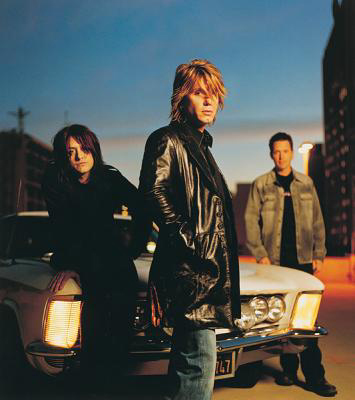
The Goo Goo Dolls – General Introduction

Left To Right: Robby Takac, John Rzeznik & Mike Malinin

Left To Right: Robby Takac, John Rzeznik & Mike Malinin

One of my greatest projects is the eventual realization of a mini-series revolving around the lives of five friends who are in a band together, and who enter a music contest. The viewer gets to see them as they learn what matters in life through music, and I have spent a truly inordinate amount of time working the soundtrack out to the point that music has become the true protagonist of the series.

One day, I caught a song called “Sympathy” on the radio. I liked it and downloaded it. The song became part of the soundtrack I assembled. And I have a rule: if I ever come across a CD containing any of the songs I have included in that soundtrack, I buy the album immediately. When I was shopping one day, I spotted the Goo Goo Dolls “Greatest Hits” CD and I purchased it. I wasn’t sure what to expect, but a rule is a rule. Continue reading

Quadrophenia (The Who) – Album Review (Part 2)

Check the first part of this review here.

Quadrophenia is a concept album that spans two records and which has 17 songs. It tells the story of a young mod named Jimmy who faces an existential dilemma, aggravated by the fact that he has four different and conflicting personalities, and each one of these reflects the personality of a member of The Who: a fighter, a romantic, a lunatic and a spiritual seeker. That is why there are four songs which are labeled as a member of The Who’s individual theme.

The story is not cohesive enough as it stands here – the movie was to be cohesive and to make sense, but that was to come much later on. In any case, Pete has come up with an emotional setting that is enough to make for any narrative deficiency. The Who are one of the best exponents of music that is internalized and felt, and Quadrophenia does not fail to deliver in that sense.

We get to see Jimmy as he his maturing, and that stands as an excellent analogy of the transition of music from the idealistic ’60s to the somehow starker ’70s. The Who were one of the longest-standing bands at that point, and they had not only the insight but also the right to articulate such issues. Continue reading

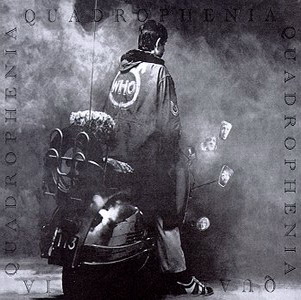
Quadrophenia (The Who) – Album Review (Part 1)

The Cover Of The Album

The Cover Of The Album

I consider Quadrophenia the biggest cultural contribution The Who ever made. That is a bold statement if we take into account that they also sang “My Generation” and recorded the defining album “Who’s Next“, adding new melodic resources to the world of music as a whole.

When I say that Quadrophenia was (and is) a significant cultural contribution, I take into account the fact that nobody else had taken the time to look back at the mod days and present them in such a representative light. Mod was the one and only aspect of British life in the ’60s that was not absorbed by America. Everything else was. Without Quadrophenia, that knowledge would have been somehow lost. And what was all the more remarkable was that when the album was originally issued the Who’s cohorts were adopting a lyrical posture that was to end up in total disconnection, singing about the dark side of the moon and stairways to heaven. That is, music would begin to lose its immediate link with those that bought it, and that disconnection would end a couple of years down the line in the punk revolution that placed both sides on an equal level. Continue reading

Give’em Enough Rope (The Clash) – Album Review

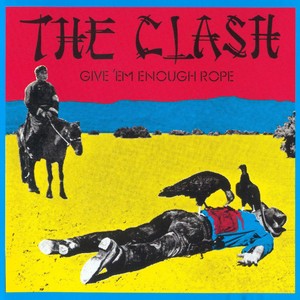
Give'em Enough Rope's Cover

Give'em Enough Rope's Cover

It is amazing how wrong both the critics and the public can perceive an album when it is first released. The Clash’s second record is a case in point. The album was released in 1978, and it was largely panned. Most of the criticisms I have read focus on the producer that was chosen, a Sandy Pearlman (famous for his work with harder-rocking outfits). The truth is that the album is the most natural evolution of the sound The Clash had presented on their first offering you could ever picture.

In actuality, it is hard to imagine how an album that starts up with “Safe European Home” could cause a bad impression on the listener. The song is one of their best style explorations, melding a call-and-response lyric with a bestial wall of riffage that eventually gives way to a reggae excursion. You know what? That song alone justifies buying the album, especially since it is omitted on “best of” packages. The album as a whole has never got the recognition it deserves. In fact, when the “From Here To Eternity” live CD was issued in 1999, not a single song from “Give’em Enough Rope” was included. Not even “Tommy Gun” (the third track here) was featured. That song showcases that the political vision of the band was advancing both at a steady rhythm and in a focused way. It was Strummer’s homage to mercenaries, and a study on violent types and their motivations. The drums emulate a machine gun all the way through, and the sudden ending makes it all feel as if a grenade had been lodged into the brain of the listener through the song, only to explode at the song’s conclusion. Continue reading

Goodbye Cruel World (Elvis Costello) – Album Review

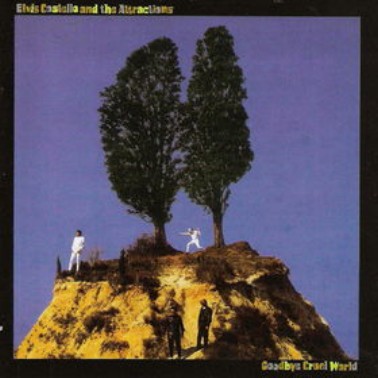
The Front Cover

The Front Cover

Costello defines this album as his worst ever. After listening to it attentively, I dare say it was (up to that point in his career, 1984) the album that was approached the worst. Some of the material holds well under scrutiny, but the fact that the best songs are segregated on the first side does lead to an exhausting listening experience. Continue reading