NADIEQUIERE Discos, A New Uruguayan Record Label Launches

A new Uruguayan record label has launched. It is named NADIEQUIERE Discos (official page here, Facebook fan page here), and it has some bands I already covered on MusicKO (such as Casablancas), and other bands like The Bear Season that I’ve always meant to review but that are still on the pipeline because I’m as peripatetic as Ryan Adams. You know, I actually look a lot like Ryan – the only differences are that he has tons of hair, that he can sing and that he can play guitar. Oh, and that he has dated Winona Ryder.

The label also has a good handful of artists that are completely new to me, which isn’t surprising because (as those fabtastic Swedes sang) “I’m living in a box but I come out when opportunity nox”. I hope to get to know them better soon…

In the meantime, give NADIEQUIERE Discos a look (official page, Facebook fan page – whatever excites you more). Of course, you need to understand Spanish to read these pages. But if you don’t, that shouldn’t be that much of a problem. I mean, how many people who are regular opera-goers know Italian? Eh? And how many people could make sense out of the wreck that Tommy was narrative-wise when it was first issued? Poor Pete Townshend, I read he did almost 1,000 interviews to cover those narrative deficiencies. Lessons learned, kids? Do things right the first time around.

Espiral (Miguel Campal) – Uruguayan Independent Artist

Miguel Campal Playing Live.

Miguel Campal Playing Live.

Do you remember the post I published last month in which I announced that both Grubb and Miguel Campal had released their respective debut albums? Admit it, you do – it was the closest you came to an epiphany when reading a piece of music-related news ever since you learnt Paul was not dead.

Well, maybe not. But the bit in which I insulted Five For Fighting was fun.

Anyway, that eventful day I promised Miguel I would cover his album on MusicKO. And since I forgot to cross my fingers, now I find myself floating over a strange land, with a sequined showbiz moon keeping me company as I do the hard drive equivalent of spinning his record.

Leaving aside allusions to other artists, arbitrary jokes that only three people would get and quotations from “Chalkhills & Children” (which even less people would understand, notwithstanding I supplied the name of the song and linked to the album it was on), I must say that forgetting to cross my fingers when talking to Miguel was actually a very good thing.

I became acquainted with a really, really fine album in the shape of “Espiral” [Spiral] – an album which is a worthy addition to the imaginary of works detailing how resolution is circumstanced by emotional frailness (try Lucas Meyer’s “Un Accidente Feliz”, and Laura Chinelli’s “Historias de Invierno” for good related listens). An album where the singer manages to turn dejection around, and make it become the kind of beauty that only experience can name between smiles. An album that is “dark, yet glowingly alive”, to rip off some bloke that wrote the preface to a book by Joseph Conrad I once bought in a moment of madness.

Miguel released “Espiral” two months ago, in an online-only edition. And since Miguel adheres to Bob Dylan’s dictum for living (IE, “money don’t talk, it swears”) he decided to make it a free download.

Espiral Miguel Campal
“Espiral” is a pop/rock album in the most vivid sense of the word. Musically, it connotes the work of tunesmiths like Paul McCartney and Noel Gallagher, with a clear debt being paid to the production techniques used in works by either. And the vocal melodies in particular remind me a lot of Blur at its finest.

The lyrics themselves are good in relation to the music, IE neither distracts from each other, and their concomitance is dexterous (the processed ballad “Michi” and the spacious “Deseos” [Wishes] are very organic examples). Yet, they are functional in terms of form. Continue reading

Free Uruguayan Music For Download: “Espiral” By Miguel Campal & Grubb’s Self-titled Album

"Espiral" By Miguel Campal

"Espiral" By Miguel Campal

“Espiral” [Spiral] is the debut album of Miguel Campal (download link), a Uruguayan musician and producer who is better-known around this pleasant side of the globe as the guitar player for Grubb.

Obviously, that name might mean nothing to you in the States (in the same way that normal folks here have no idea who Willard Grant Conspiracy or Drive-by Truckers are) so a few quick facts are in order:

1) They play a mixture of rock, funk and soul, and they play it well.

2) They issued an 8-song EP in 2008, including both studio recordings and live cuts.

3) They have just issued their first full-length studio album. It has 11 tracks, and it can be downloaded for free on their website. (The same goes for their debut EP.) Continue reading

Casablancas (Uruguayan Independent Artist)

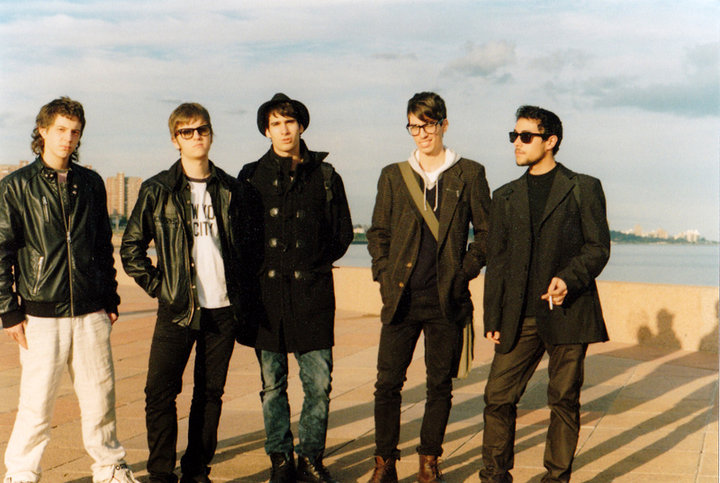
Casablancas are Martin Rela (vocals & rhythm guitar), Syd J. Gerones (lead guitar & backing vocals), Nacho Lorenzelli (bass guitar), Freddy Suarez (keyboards) and Seba Moro (drums & percussion).

Casablancas are Martin Rela (vocals & rhythm guitar), Syd J. Gerones (lead guitar & backing vocals), Nacho Lorenzelli (bass guitar), Freddy Suarez (keyboards) and Seba Moro (drums & percussion).

It’s a little known fact, but it’s absolutely true. H.G Wells (one of the founding fathers of science fiction) did spend some time in Uruguay. He was in the country during the summer of 1879 – 1880, in the seaside town of La Pedrera. Accounts of his stay there are unanimous, if only because the population of La Pedrera back then consisted only of 8 people, 3 dogs and 1 dalek.

We reportedly know that Wells used to wake at 7 in the morning every single day, walk through the beach until dusk and then come back to his little cabin. He did that the whole summer.

Then, on the final day of his stay there he clenched his fist, pointed it to the balmy sky and screamed at the top of his lungs, “SHIT, ISN’T EVER ANYTHING TO DO IN THIS COUNTRY???”.

He then had a kind of mystic experience. It is said he saw something blazing in the sky. If he had been Caetano Veloso he would have written the lyric that goes “and my eyes/go looking for flying saucers in the sky”. Instead, he dreamed up the story of the Martians landing on Earth that you can read on his seminal work “The War Of The Worlds” (1898). He turned the joyous dunes of La Pedrera into Horsell Common, and he came with a killer virus that sent the poor old Martians to kingdom come simply because he caught some scorching disease while he was in Uruguay, and he had to go to the toilet six times per day for three years afterwards.

A Tripod From "The War Of The Worlds" Raising Havoc

A Tripod From "The War Of The Worlds" Raising Havoc

This history is little-known because there has always been a kind of multinational conspiracy to keep Uruguay off fictionalized works. Powers too evil and too daunting collude to keep the effervescent South American country from raising its head in the world of literature.

And in a certain sense, some things have remained the same in Uruguay ever since Wells paid us that veiled visit. There’s still people who scream at the sky out of sheer boredom, and lament their lack of prospects. They vent their frustration in different ways. Some play soccer and marry Argentinean models, some have music blogs where they write about anything that comes into their minds, and some others pick up their guitars and play good old rock and roll, paying a direct homage to the best British and American music that ever existed. Continue reading

Free Uruguayan Music For Download: “Amigos Imaginarios” By Picnic

"Amigos Imaginarios" By Picnic

"Amigos Imaginarios" By Picnic

Picnic is a Uruguayan punk band whose debut EP has just become available for download. It is named “Amigos Imaginarios”, it has four punchy cuts (mainly dealing with vices, personality and emotions too torrid to mention) and you can get it for free here.

It also has a cover that would make Frank Zappa, The Mothers of Invention and the whole cast from “200 Motels” proud. I have discovered that if you stare at it for a couple of minutes and then look at the wall, you’re seeing a hybrid of Guernica, the movie poster for “The Lovely Bones” and the face of Doc Brown. Well, I did at least. I suppose that’s what happens when you have been fixedly watching nothing but Placebo videos the whole week.

Boy, “The Bitter End” is badass. And what about “This Picture”? Atomic. If Picnic ever shoots one like these, then I’m creating a category on the blog solely for them.

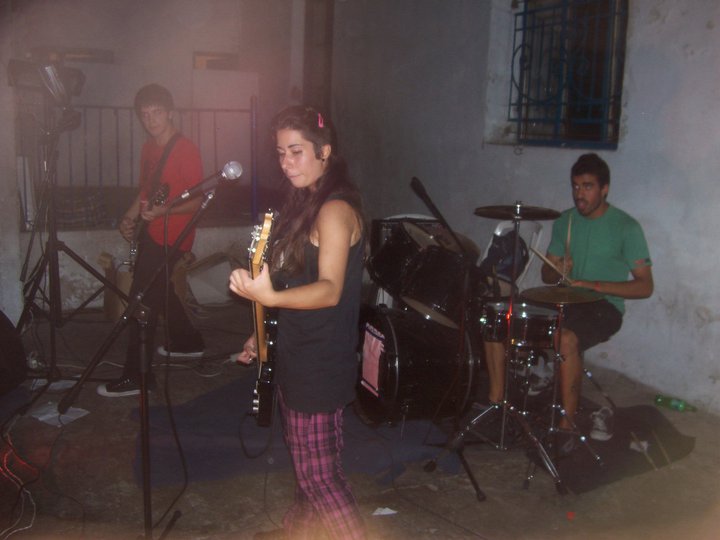
Picnic Playing Live. Left To Right: Mato, So and Germán.

Picnic Playing Live. Left To Right: Mato, So and Germán.

Anyway, “Amigos Imaginarios” is a greatly-enjoyable EP. Sassy references to The Ramones abound, with songs like “Él Es Punk” [He Is A Punk] paying a direct homage to compositions such as “Sheena Is A Punk Rocker” and “Judy Is A Punk”. The ensemble playing is good, and the way the voice of singer Sofía is juxtaposed with that of her cohorts (guitarist Mato and drummer Germán) is really ear-catching (specially on the title track). Continue reading

Historias De Invierno (Laura Chinelli) – Uruguayan Independent Artist

The basic band who recorded “Historias De Invierno” is Laura singing and playing guitar and keyboards, Fran playing bass, drums and sequencers, Nicolás Demczylo handling additional guitars and sequencers, and Álvaro Barneche on cello. Laura wrote  all the songs.

“Historias De Invierno” is Laura Chinelli's debut album. The band that recorded it included Fran Nasser, Nicolás Demczylo and Álvaro Barneche.

Is there life before love? Is there a time that exists outside of the prolongation of single moments that come to define us sentimentally? Or must we all live slave to that prolongation of moments, as if caught in an emotional ebb and flow which means all that happens will be validated by what had once come to be, ever and ever again?

Laura Chinelli’s debut album is nestled between all these questions, in a point where eyes are wide open, but often can only stare straight into that night which is not darkness but the blinding light of conscience. The majority of the songs on the album (which has been suitably named “Historias De Invierno” [Winter Tales]) have the singer retracing her steps through bridges that are not even there any longer, or burning with the kind of aching fire that is forever starting and stopping.

Laura Chinelli

Laura Chinelli

In more places than one, “Historias De Invierno” feels like a musical variation on Villiers de L’Isle-Adams’ “Axel” – a story where the memory of love can modify all the present layers of perception. On songs like “Si Me Pierdo” [If I Get Lost], characters can’t see each other any longer. But their reflections still live in their eyes, and will keep on being there in spite of that blinding light which tries to overcome their staying force.

Other songs such as “Debajo De La Lluvia” [In The Rain] are more direct and rueful, very similar in tone and message to the defeatism of a song like Richard Thompson’s “She Sang Angels To Rest”. Compare Laura’s “puedo no volver a ser, puedo no ver, puedo no creer” [I might never be again, never see, never believe] and “Y si hoy soy lo que soy, y si no tengo a donde ir, y si hoy pierdo la razón” [And what if today I’m what I’m not, what if I have nowhere to go, what if I lose my mind] to Richard’s “how do you fall when you have already fell for the best”.

Yet, there are also moments of sentimental victory. The deepest comes as the album is ending with the song “Llévame“ [Carry Me]:

Llévame en tu mente
Búscame en los paisajes que te gustan
Búscame entre la gente
Búscame también en la oscuridad

[Carry me in your mind
Look for me in that scenery you love
Look for me in the crowd
And also, look for me in the darkness] Continue reading

La Corporación (Erika Chuwoki) – Uruguayan Independent Artist

OK, I know I’m giving myself away big time here and tarnishing what little reputability I had to begin with, but… can you guess which album I have heavily rotated every day at my office for the past two months or so? Badly Drawn Boy’s turgid “Born In The UK”.

Don’t get me wrong – I admire the guy so much that if there were a Badly Drawn Boy plush toy it would be right there in my pillow every night. And if it came with interchangeable wool hats, then I would be the happier for it (jeez… talk about tarnishing one’s reputation! How far will this go?). But that particular CD is one of the biggest misconceptions ever since someone gave Scarlett Johansson the go-ahead for “covering” Tom Waits.

And now that I have brought the wool-hatted composer from the British Isles to mind, what I want you to imagine is what would happen if he went clubbing one night, met Syd Barrett at some mad one, and tripping out of his arse he crashed the night at Lou Reed’s. And recorded an EP before passing out. If you could indeed imagine the whole scenario, then: A) You need immediate assistance, and B) You will know what to expect from the debut EP that has been issued by this new Uruguayan artist going by the ceremonious name of Erika Chuwoki.

Erika Chuwoki

Erika Chuwoki

“La Corporación” [The Corporation] is a five-song EP. Moving within the stylistic parameters insinuated above (which the band aptly terms “pop psicobélico”), the album finely interweaves personal and collective appreciations on life, love and every single thing that goes “bump!” in the night. Yes, my little grasshoppers, that includes sex – the crash of romantic crushes is studied enthusiastically on “Amar El Mal” [To Love Evil], one of the noisiest, more memorable cuts of the whole disc.

Plus, the EP has a song named “Aguante La Puta Que Nos Parió” (an obscenity I can’t translate because merely looking for an English equivalent makes me blush and cry in my tea) – the kind of title that only Harlan Ellison’s psychopath music twin could dare use on an album cover. The phrase, incidentally, is not mentioned on the song once. As if the band were inviting a snicker in the finest rock & roll tradition, and then defying the snickerers by saying, “You morons, you judged something by the cover and not by its actual content”. Placenta, pleasure, placebo indeed… Continue reading

Free Uruguayan Music For Download – “OVNI” By Matías Singer

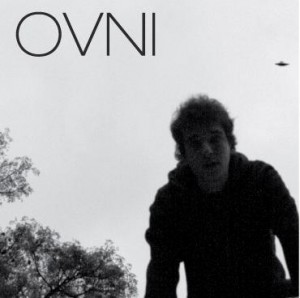
“Ovni” Is The New Album By Uruguayan Independent Artist Matías Singer.

“Ovni” Is The New Album By Uruguayan Independent Artist Matías Singer.

Beaming down from the stars in their silver atmospheres, we have the new album by Matías Singer (go sulk in the corner, Joe Strummer!).

The disc (named “OVNI” – the Spanish word for UFO) is mostly an acoustic affair, with some lap guitars, accordions and light percussion to keep things jingly-jangly.

It has 13 songs, the vast majority of which are in English, although a few are in Spanish and I personally like them better than the ones in English. These include the title track and “Extraterrestre” [Starling], the one true “band” recording that is offered.

And as far as the English contingent goes, I have a lot of time for “You Are A Demon”, “Until The End Of The Night” and “I Never Dance”. These are the cuts that have the brightest set of melodies. On the other hand, there is a thing called “No Evil” that almost made erase the whole thing from my HD and optimize it afterwards to ensure the monster was gone. Continue reading

Los Pazientes (Uruguayan Unsigned Artist)

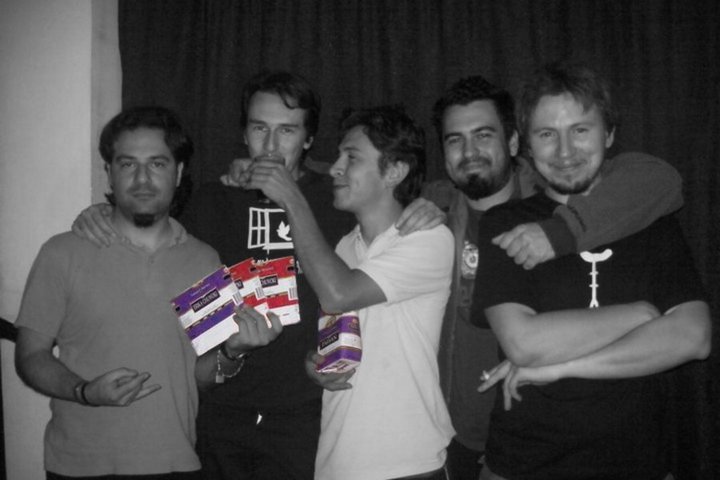
Los Pazientes are Marcel Studebaker (drums, percussion, backing vocals), Diego Carusso (guitars, backing vocals), Uvit Cropa (bass, loops, samplers), Juan Zoop (vocals) and Ramón Guayomin (guitars, backing vocals).

Los Pazientes are Marcel Studebaker (drums, percussion, backing vocals), Diego Carusso (guitars, backing vocals), Uvit Cropa (bass, loops, samplers), Juan Zoop (vocals) and Ramón Guayomin (guitars, backing vocals).

To many, the end of the ‘60s was the true culmination of an era. But to others, it was just the beginning of a fight that rages to this day. The former look at Woodstock and recall Pete Townshend’s immortal words about the event, “what they [hippies] thought was a new reality was actually a field full of people covered in mud and sheep shit… if that’s the new world they want to live in, then fuck the lot of them”. The latter regard Woodstock as the triumphant day of activism bar none, as the event that could congregate people from different corners of America who where there to incarnate a message of relentless change and renewal.

Each person is free to have his own interpretation of what happened that day, and the true significance it had. Personally, when I look at the events that took place right after Woodstock (including Altamont, the Manson murders and the seismic punk revolution at the tail end of the ‘70s) I am inclined to look at explicit calls to action with eyes that are not so eager. Someone once said that the only answers that have any value in life are the ones we arrive at ourselves. I think the same applies to any philosophy, or course of action. The ones that can take us to a positive conclusion are the ones we elaborate ourselves. And I don’t know if you remember the song “Follow The Cops Back Home” by Placebo, but I hope you do because it has a phrase that summarizes what I wrote above, and that lets me introduce you to the Uruguayan unsigned artist I want to cover today.

During its flourish, “Follow The Cops Back Home” has a verse that goes:

The call to arms was never true
I’m medicated, how are you?

That verse cannoned into my head when I discovered the music of Los Pazientes [The Patients]. There was something incredibly accurate about those words, and how they connected the band’s moniker with its intent of purpose.

To quote Los Pazientes [English text below]:

“Los Pazientes fueron concebidos principalmente como respuesta a la necesidad de generar un espacio de distribución y exhibición de un mensaje propio, que se compromete con la búsqueda de buenos espíritus, la lucha de algunos pueblos y de la guerra en contra del amor. A través de la música, (muchas veces el rocanrol) Los Pazientes, proponen incentivar y proteger en cualquier circunstancia ese mensaje, mediante la colaboración, organización y cooperación de diferentes artistas.”

[The Patients were primarily conceived as an answer to the need for a space in which to distribute and spotlight a message of its own, pledged to find good spirits, the fight of some nations and the war against love. Through music (often rock ‘n’ roll) The Patients aim to encourage and protect this message at all times, by making the collaboration and cooperation among different artists possible.]

There you go. As far as calls for action go, this is imbued by as much directness as temperance. It is something very representative of what the band is about, both musically and lyrically. There are echoes of liberation throughout its music (such as in the song “Rojo Y Negro” [Red and Black]), but what I read in the vast majority of cases is a call for individual action, with full awareness of the consequences that one’s decisions will have on a larger scale. It is the kind of subtle difference that has a substantial weight in the end. It is the one lesson that I feel we should learn from the idealism that music knew in the ‘60s, and the violent ramifications that such an idealism gave way to as the ‘70s became more and more divided, and some flags were waved and others burned indistinctly.

And in the end, the conquest of love is the biggest concern in these stories of arsonists in basements that realize they have new things to say and new horizons to strike for, of characters who tell storms about their own inner storms, as drums catch fire and music that lasts longer than one’s own blindness and limitations fills the surges of the air.

“Quiero escuchar el último latido en el hondo amanecer sin vos” [“I want to listen to the final heartbeat in the deep dawn without you”]. These lines close “El InZenDiario” [The Arsonist]. It is up to the listener to imagine how the day following that dawn will shape itself. Whether things will be ideal or real. Whether there is time enough to change oneself and his own preconceptions when it comes to what he wants to do and how that relates to what ought to be responsibly done.

So… I’m medicated, how are you?

I guess it doesn’t matter.

We’ll take a dive, swim right through.

There’s no stopping until the other side has been reached.

This is the band’s MySpace profile.

Despertando Del Silencio (El Umbral) – Uruguayan Independent Artist

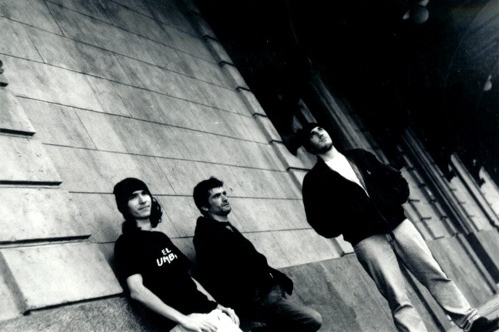
The First Lineup Of El Umbral: Juan Loskin, Alejandro Nuñez & Javier Pedrazzi.

The First Lineup Of El Umbral: Juan Loskin, Alejandro Nuñez & Javier Pedrazzi.

Elvis Costello was right.

From the other end of the telescope, things can be seen.

Every Uruguayan echo boomer grew up watching bands on his flat top that he was resigned never to feel in the flesh. REM, U2, Nirvana, Guns ‘n’ Roses… he always knew such bands were hardly going to set foot in his home soil. If he had the money and the wayfaring spirit (not to mention parents that were either the pinnacle of coolness, or that just didn’t give a shit) he knew he could cross the River Plate and go to Buenos Aires to catch up with any of those bands as they toured South America. And no, nobody could have imagined back then that one day an overweight Axl Rose with a small army of guitarists in tow to replace Slash would play the Estadio Centenario. Neither could anybody have imagined that they would play the theme from the Pink Panther during an intermission as the ultimate sign of respect to the enraptured audience that attended the show.

Well, that was the way things were back then. And if it sounds like a bummer, it is because it was a bummer. Yet, the silver lining was there. And it was a particularly shimmery one.

In the same way that the best orators are always the best listeners, those who spend their lives contemplating are the ones who can take action more purposefully. And if there was something we were known to do back then, it was to wear one album after the other of all those bands that for us existed only in MTV. Assimilating the notes and inhaling the sounds as only those who know they will never watch their heroes live could ever hope to do.

Many of the Uruguayan bands that in a good and in a bad sense defined the musical identity of the country came together back then, and they are still around. Both La Vela Puerca and No Te Va Gustar, for example, became active performing units as the ‘90s were gathering pace.

And as always, the story of those bands that could never achieve mainstream success is every bit as interesting as the story of those who did manage to take all the commercial barriers down.

The story of El Umbral [The Threshold] certainly is. And the fact the band is still around (and about to issue its fourth album) just gives everything that vital throb of significance that always wins people over.

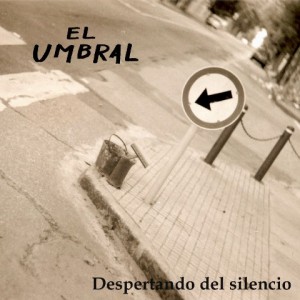
"Despertando Del Silencio" Was El Umbral's Debut Album

"Despertando Del Silencio" Was El Umbral's Debut Album

El Umbral officially came together in 1999, but the true inception of the band went way back to 1996, when three friends named Juan Loskin (bass), Pablo Riera (drums) and Alejandro Nuñez (guitar) would get together and play songs by Nirvana and Uruguayan linchpins such as Los Estómagos [The Stomachs]. That lineup didn’t last long, and the drummer was soon replaced by Javier Pedrazzi. At around that time, it was decided that Alejandro was also going to assume vocal duties, and the trio settled on the name El Umbral. The year was 1999. And two years later, the band finally managed to issue its debut album. It was titled “Despertando Del Silencio” [Awakening From The Silence]. Somehow, that name said all there was to be said. And what the name did not say, the music itself made clear. Continue reading