This is the kind of site that with some work could become notably more appealing. As it stands right now, it lets you turn YouTube into a (very) basic karaoke. You look up the song (or the artist), and upon picking a video it is played back at you while a second window (situated on the right) displays the lyrics to go with the song.
The idea is simplicity in itself, and the approach so far is nothing to go out of your way for. However, it can turn out to be exponentially good if the lyrics became an integral part of the video and were displayed automatically as the song went on. As it stands right now, you have to scroll them down in mid song, and if you don’t have a lackey at your beck and call to do the dirty job then it’s goodbye inspiration and concentration. Continue reading →
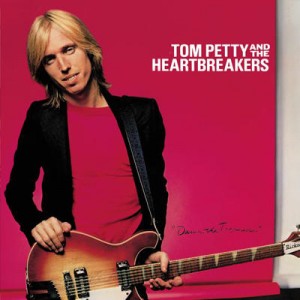
"Damn The Torpedoes" Was Tom Petty & The Heartbreakers First Platinum Album. It Was Issued In 1979.
“Damn The Torpedoes” was Petty’s third album, and the one that brought true recognition to him and the Heartbreakers (his classic backing band). It came out in 1979, and it signaled the first run-in that Tom had with the industry. Basically, Petty’s record company at the time (Shelter) was sold to MCA, a move Petty disapproved of. He tried to detach himself by all means, and he was to eventually end up bankrupt as a result. Hence the title of the record – Admiral David Farragut’s famous order at the Battle of Mobile Bay: “Damn the torpedoes, full speed ahead!”.
Getting down to the music, now, the disc is invariably good. It caught Tom and the boys at the peak of their explicit days as rockers, whereas the album closer “Louisiana Rain” evidenced a desire to innovate and move out of the constraints of the genre, even if only a little.
The singles included “Refugee” (a song that hit #15) and the top 10 hit “Don’t Do Me Like That”. “Here Comes My Girl” (which featured a spoken delivery by Tom) and “Even The Losers” were also to go down as Tom Petty classics. The latter in particular will always be an excellent example of Petty’s prototypical characters – people who are out of fortune but not out of luck, as I commented on the general introduction I wrote yesterday. Continue reading →
A rocker at heart. That is the way Tom Petty would go down in history. Sure, there were some diversions along a career that spans three decades and that still keeps going on strong. The first one came in 1985 with the concept album “Southern Accents”, and his first stint as a Traveling Wilbury showcased a very different side of him (the second album by the Wilburies found Petty back on more familiar territory). But these (and his solo albums like Wildflowers) can be deemed as mini-vacations after which he came energized like never before.
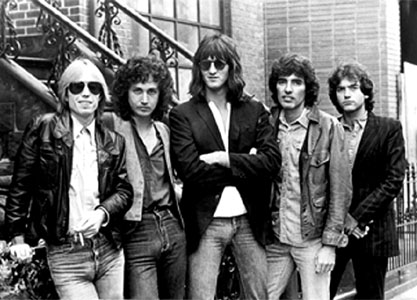
Born in Gainesville (Florida) in 1950, Petty’s interest in rock & roll music was instilled by two of the main icons of a whole generation, The Beatles and Elvis Presley (whom he was to met in person). After playing with a band called Mudcrutch that was to issue only a single back in the ‘70s (the band would reunite in 2008 to do a proper record), Petty launched a solo career with the assistance of two of his Mudcrutch bandmates, Mike Campbell (lead guitar) and Benmont Tench (keyboards). They were to be joined immediately by Ron Blair (bass) and Stan Lynch (drums), and that was the birth of Petty’s legendary backing unit, The Heartbreakers. Both Campbell and Tench are with Petty to this day, and Campbell in particular has had a big input on Mr. Integrity’s music both in terms of compositions (they often share writing credits) and production-wise.
Mr. Integrity. That is one of Tom Petty’s most recurrent nicknames, specially among punters. He has been known to stand against music industry abuses, and to side with fans time after time regarding decisions that would affect them like the marking up of albums. Tom’s first direct attack came with the title of his third record, “Damn The Torpedoes” (1979). It was Tom Petty & The Heartbreakers’ fist platinum album after the previous one (“You’re Gonna Get It”, 1978) had cracked the Top 40. It included the radio hits “Refugee”, “Don’t Do Me Like That” and “Here Comes My Girl”. Continue reading →
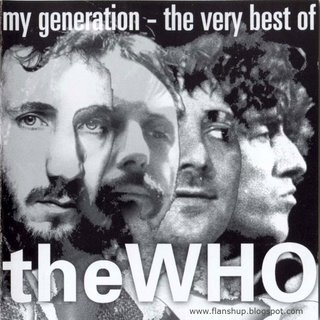
This Compilation Surfaced In 1996, And It Coincided With The Remastered Series
This was the single disc compilation that accompanied the remastered series that were issued in the ‘90s. The disc has 20 tracks, and many were the remastered versions that the forthcoming CDs were to include.
On the whole, the compilers did a very good job. All the early non-album singles minus “Call Me Lightning” and “Dogs” are included. From “Tommy“, we have “Pinball Wizard”. From “Who’s Next” we have “Baba O’Riley” and Won’t Get Fooled Again” (both unedited). Beside, two of the three Lifehouse leftovers that were issued as singles are here. They are “Let’s See Action” and “Join Together”. We are missing the final one, “The Relay”. It is a loss, but not a great one. The best thing about it is Moon’s funky drum track. But the other two singles were the real deal, and they proved it on the charts.
“Quadrophenia” is represented by just the one track, “5.15” (also unabridged). Finally, we have the ineluctable “Squeeze Box” (it was a top ten hit after all), an edited “Who Are You” and the full length “You Better You Bet”. The song is unremixed. You can tell because the background vocals are not as crisp as on the reissued “Face Dances”. Continue reading →
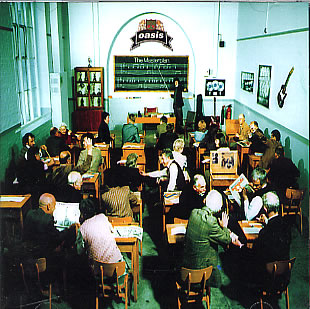
The Masterplan (1998) Collected B-sides That Rivalled And Often Surpassed Album Tracks And (In Some Cases Like "Acquiesce") Even Their Respective A-sides.
Funny enough, from having given up on Oasis a long time ago to the point I gave away most of their albums I have reached a point in which I reviewed all of their discs in two weeks. That was not deliberate or anything. Rather, it was a sort of rediscovery and a way of burying the hatchet with a band that was always there when I needed it. Maybe this reapproach was motivated by having listened to a lot of bands from Manchester recently (with The Stone Roses and Joy Division topping the list). I am not certain, but I am glad it happened. And now, I am reviewing the final album by them I haven’t reviewed up to this point: “The Masterplan”.
Chronologically, the album followed “Be Here Now”, and it was released when the band had announced they were to take a three-year break. A compilation of b-sides, it was only going to be issued in countries where you couldn’t buy the singles, but in the end it was released worldwide.
Now, the key to understanding why the album is so masterful is keeping in mind that Noel had stockpiled a large body of work, and that some of those songs were even better than albums tracks which did make the final cuts. It is easy to criticize the inclusion of about half the songs on “(What’s The Story) Morning Glory?” knowing that cuts like “Rocking Chair” and “Half The World Away” were available then, not to mention “Round Are Way” and “The Masterplan”. And I haven’t even mentioned “Acquiesce” yet, the defining song about the sibling rivalry between the two brothers in which they alternate vocals until singing together “because we need each other/we believe in one another/and I know we are going to uncover/what’s sleeping in our soul”. Continue reading →
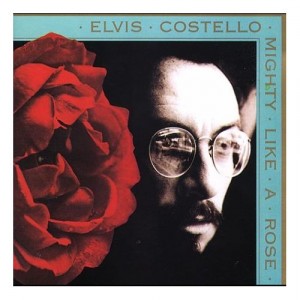
"Mighty Like A Rose" Was Elvis Costello's First Album Of The '90s. It Had A New Collaboration With Paul McCartney Named "So Like Candy".
I will never forget how much I resisted buying this album. The guys at the CD store had it for a long, long time. I was dead against getting my hands on another disc that had “Hurry Down Doomsday”. One copy of that song as part of the “Extreme Honey” compilation sufficed. Plus, the other songs I knew from “Mighty Like A Rose” clearly signaled that the CD stood as the highest peak within Elvis career as far as inventiveness that spilled into weirdness went.
Eventually, that was what made me shell out for the album. I just admire the man, and I had to see what did exactly happen for him to end up cutting a disc with a string quartet just two years later.
Funny enough, I did not get that answer. What I got was a CD that was (and still is) impenetrable. The level of musical chaos and the jumble of styles make for one of the most hostile records I have ever come across.
The production is certainly a major issue. Those who complain about the way Mitchell Froom produced Richard Thompson should give “Mighty Like A Rose” a spin in order to realize that they shouldn’t complain to begin with. But Elvis also had his own way behind the mixing board, so that he was as much of an instigator as anybody.
A sonic avalanche heralds the first cut, “The Other Side Of Summer”. Simply put, it sounds like The Beach Boys on every kind of substance you could ever imagine. Still, it is the one composition where an approach that is heavy-handed elsewhere works out. Whether that is because it is the first song out of the fourteen on offer and that it catches you while you are still fresh could be debated, though – when I listen to the song on “Extreme Honey” I am not that keen on it. Continue reading →
Songbright is a new service that will let any musician stream his own pieces online, and generate an income for doing so. The premise is to pay artists for the actual times their songs are played, and I think the system will specially cater for those who are beginning. I say so for two main reasons.
First, the pricing is very reasonable – there are four plans to go for, and signup actually starts for as little as $1 a month. That plan (“Basic”) will let you upload one song. There are three other plans available, too, and they will let you upload 3, 5 and 10 tunes and their respective names are “Plus”, “Pro” and “Rockstar”.
That brings me to the second reason why I think this will suit budding musicians best. Now, let’s get honest. How many good songs one really has? I mean, good songs. Not the ones we wrote for that girl we fancied in order to make her go weak at the knees, not the ones we love because they have a true sentimental value attached to them. Good ones. The ones that could let us crack it. Many of us don’t even think about it. Continue reading →
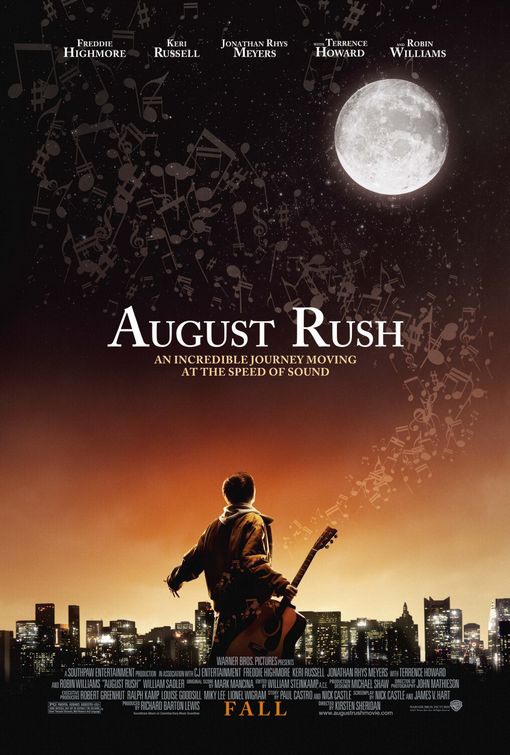
"August Rush" Is A True Fairytale Set In Our Days. The Movie Was To Be Nominated For An Oscar For The Song "Raise It Up".
Those who ever pick a guitar, those who ever sit in front of a piano or behind a drum kit, those who stand up mike in hand are doing it not because of fame, becoming immortal or hitting the cover of magazines. Any musician truly worth its salt steps on a stage because there is something he just can not communicate otherwise, in the same way that a writer or a painter expresses a part of him through his art – a part that he could not convey by other means.
Nowhere is this reminded with so much grace and virtuosity than in “August Rush” (2007). In the movie, music creates life. A boy is born to classic performer Lyla (Keri Russel) and rock musician Louis (Jonathan Rhys Meyers) in a night of passion. Fate then separates the two of them. Lyla still decides to have the baby, but her father is against it because it would hinder her career as a cellist. When she has an accident, he gives her newborn away for adoption, naming him Evan and telling Lyla her child has died. The boy (played by Freddie Highmore) is to eventually embark on a journey to find his parents. He is going to make them listen to him, turn his life into a melody they could never pass by.
That is the basic premise of “August Rush”, the closest to a fairytale set in the modern world I have ever seen. Don’t approach it looking for a rationale or feasible plot because you will be cringing within half an hour. However, if you believe that music is more than something to be played at the background during parties or casual events, “August Rush” will be in your wavelength. And if you are a MusicKO regular, I think I know where you stand. Continue reading →
This is the second part of the review. Learn about the context the album is circumscribed in and the first four tracks here.
“Exquisitely Bored” is the fifth song on the album. It is one of the two direct analyses on fame and stardom, the other being (obviously enough) “Stardom In Acton”. “Exquisitely Bored” is Pete’s lyrical take on a theme assayed by The Eagles not long before: life in the “Hotel California”. The message is basically the same, although in “Hotel California” it is implied that no-one can get out, whereas Pete’s song seems to be saying that the ennui is a true choice, that it is comforting, and that “there are good times walking in Laguna…” before finishing the excellent chorus with the line “but it rains in my heart”. One is tempted to ask the question first posed by Creedence Clearwater Revival there and then, namely “Who will stop the rain?”.
The fact is that things don’t look too sunny either when we talk about the London scene. As described by the song “Stardom In Acton”, local success seems every bit as vitiated, and also more transfiguring in the long run. The one song that describes all the vices you can imagine is this one, not “Exquisitely Bored” – “want my stash, want my cash, want omnipotence”, “the long cigarette full of hash”, “don’t admire anonymity”… It seems that making it in your hometown is the most dizzying event that could ever occur. It probably has to do with the fact you can then look down your nose at those who put down your aspirations all your life, and snort “I made it!” in their very faces. Continue reading →
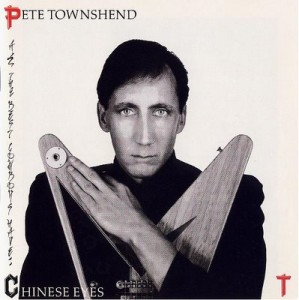
"All The Best Cowboys Have Chinese Eyes" Is My Favorite Solo Record By Pete Townshend. The Album Was Released In 1982, After The Acclaimed "Empty Glass" Had Ignited Townshend's Career.
“All The Best Cowboys Have Chinese Eyes” was issued in the aftermath of Pete’s near-fatal depression of 1980-81. Keith Moon was dead, Kit Lambert was gone, and Pete was not reaching out to the public the way he once did. The faith on his band was broken, he had already launched a promising solo career. His marriage was in shambles (he was living away from his wife and children), and he was a million pounds in debt.
You must understand that Pete was never a strong person. He always had enormous difficulty coming to grips with who he was, and the way others saw him was instrumental to Townshend. When others perceived there was a problem, when they could see behind his blue eyes, that was the time he also noticed that he had a problem. And like most people who face alcoholic issues, he used to go to extremes all the time. He once remarked he even used to get suicidal about people he didn’t know at all if rebuffed.
During this time, virtually everybody scolded him. Roger Daltrey almost had it with Pete one night on stage, and even his best friend Richard Barnes (he who had suggested the name of the band all those years ago) cornered Townshend and called him “pathetic”. Pete’s response? “It’s alright. Why should Keith have all the glory?”
Finally, during a night out at the Club For Heroes he took heroin, overdosed and had to be rushed to ER. It transpired his heart had stopped beating for a while. A mere second later would have been fatal.
The turning point came shortly afterwards when wife Karen asked him “Why don’t you come over again and we try to work it out?”. That gave him the resolve to start pushing once more.
His 1982 record captures all of the above, and it shows that sometimes there is not a difference between being shattered, being broken and being fragmented. The only valid difference lies in being there or not being there at all.
“All The Best Cowboys…” is experimental in every sense. The first track has Pete reciting instead of singing. “Stop Hurting People” is actually an open letter for reconciliation he had written to Karen. The song, dealing with a love that died and had to be born again was the one way to start the record. “People, stop hurting people”, he pleads. And we all can picture him looking into the eyes of his wife as he does so, his gaunt reflection in her eyes, the words “without your love there is no flame” hammering and hammering until they are unleashed into song. Continue reading →