James Fontana (SongVote) – Interview (Part 2)

I’d like to share with you the “Music & You” segment of my interview with James Fontana from SongVote. This is the last part of the interview that started here.

PART II

MUSIC & YOU

When did you become interested in music? What was the first album or single you ever purchased?

I’ve been interested in music for as long as I can remember. I remember saving my money in the early 80’s for a “Ghettoblaster” that was the term in America back then for a Jambox.  The first tapes I purchased on my own were Tears for Fears, Cyndi Lauper and Starship.  My, how my taste have changed a bit, except for Cyndi, Her music still takes me back to good memories.

Are you in a band yourself, or have you been in a band in the past? Is there a clip on YouTube or elsewhere we could watch?

No, that for sure is NOT my talent.

Musical likes and dislikes? Favorite artists?

I find myself listening to a lot of down-tempo beats like Kaskade and zero 7, but I enjoy all music from Steely Dan to Beyonce. Continue reading

James Fontana (SongVote) – Interview (Part 1)

James Fontana from SongVote was kind enough to sit through the MusicKO interview in full. Thanks a bunch, James! You will find the first part of the interview below, and the second is here.

James Fontana (SongVote)

James Fontana (Co-founder of SongVote)

Full Name: James Fontana
Age: 33
Startup: SongVote
Position:  Co-Founder

PART I

THE STARTUP

Tell us a little about your startup. How was it conceived? What are its most distinctive features in your opinion?

A few years back I put a pool in my back yard.  Every weekend people would come over and swim and there would be 5-7 iPods around the docking station.  No matter what, the music always became an issues.  Someone was always taking out someone else’s iPod and putting their own in.  For me I saw an opportunity for a solution that involved musical democracy.  I wanted to create a way that we could all come together based on our similarity and diversity of musical taste.

In my opinion the most distinctive feature is the ability to create one playlist based on the opinions of a group.

What was the original launch date?

Feb. 2010

What are the main uses people are putting SongVote to? In which countries has it been more successful?

We are noticing people having fun on SongVote by expressing their musical opinion in different public contest.  We also saw someone create a playlist that was moving from Dallas to Boston and was going to be in the car for three days.  They had a playlist built on song that reminded friends of the good time they spent together.  This person was able to listen to a playlist built by close friends during their long drive. Continue reading

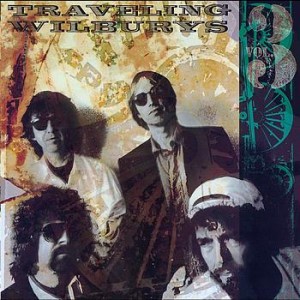
The Traveling Wilburys Vol. 3 – Album Review

"The Traveling Wilburys Vol. 3" Was To Be The Final Release By The '80s Supergroup

"The Traveling Wilburys Vol. 3" Was To Be The Final Release By The '80s Supergroup

The second (and final) record by the Traveling Wilburys surfaced in 1990, and it was to be titled “Vol. 3”. This is widely thought to be a joke suggested by George Harrison (who was the unofficial leader of the band) to send fans scrambling for an album that never was. We know he did suggest the title, but I believe that it was a two-fingered salute to bootleggers rather than a joke – the amount of “unofficial” Wilburys records that came out after the first volume was unbelievable. And many also consider Tom Petty’s first solo disc (“Full Moon Fever”) to be the “lost” Wilburys album – it was produced by Lynne, and every Wilbury (except for Dylan) collaborated, albeit marginally in most cases.

The fact remains that after a universally-praised record that rejuvenated everybody, this new volume was released. The main difference telling one record from the other? The first time around, the guys were having fun. Now, they were getting down to business. The joviality was somehow missing the second time around. The professionalism remained, and so did the camaraderie. But not the lovable goofiness.

The passing of Roy Orbison surely had a big impact on the band, and the fact that both Dylan and Harrison penned songs that were truer to their ‘80s selves rather than genuine Wilbury music was the tipping point. Songs like “Where Were You Last Night” (Dylan) and “You Took My Breath Away” (Harrison) pointed to each artist’s worst tendencies during the previous decade. And the one joke of the disc was incredibly forced – “Wilbury Twist” had rampant instrumentation but they were trying too hard to revive something that the first time around flowed so effortlessly.

Speaking of rampant volume, the album’s first single (and its first track) was the heavy “She’s My Baby”, a song that always makes me think of Pete Townshend’s “My Baby Gives It Away”, only that the characters in the Wilbury’s song are far, far meaner and darker. The track (which did very well in the charts) also featured Gary Moore on guitar – he definitively had a field day. Continue reading

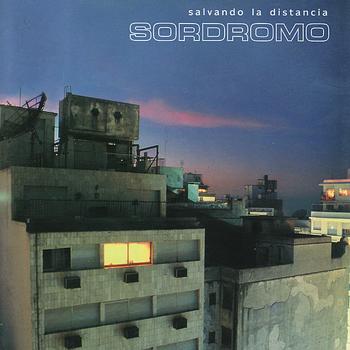
Salvando La Distancia (Sordromo) – Uruguayan Music

"Salvando La Distancia" Was Issued In 2004, And It Was A Gold Record By The End Of The Year

"Salvando La Distancia" Was Issued In 2002, And It Was A Gold Record By The End Of The Year

A Uruguayan band that combined rock instrumentation with some electronic beats and scratches in quite an engaging way, Sordromo released “Salvando La Distancia” [Closing The Distance] in 2002. To me, the album (issued by Bizarro Records) exemplified how their approach (which yielded very good results in terms of singles) could be a little monotonous over an extended work. In the case of “Salvando La Distancia”, the monotony was aggravated by the solipsistic nature of the lyrics – all of the songs (with the exception of “Música Fea” [Ugly Music] and “Ventanas” [Windows]) were romantic fare. The combination could be a little debilitating sometimes, specially during the mid-section of the album.

Still, the disc had more than a few remarkable compositions – and then some. The first five tracks in particular were praiseworthy, with the singles “Las Cosas Del Querer” [The Way Loving Is] and “Como Un Sueño” [Like A Dream] achieving a phenomenal amount of exposure in Uruguayan radio. The two songs were also prime examples of the band’s marriage of rock instrumentation and electronic motifs. But the best example of Sordromo’s signature sound found on the disc was to be “Salvaré” [I Will Close], a song that mixed strangled guitar ruminations and matching electronic beats under a lyric dealing with separation akin to disintegration, and the will to overcome it come what may.

And the songs “A Solas” [Alone] and “Ventanas” [Windows] were quite anthemic, even if the lyrical devices they contained were nothing new. A sample line from “A Solas”: “A solas / con todos / duele / sé que no te gusta estar a solas con otros / se hace tan difícil cuando estás a solas” [Alone with everybody / I know you don’t enjoy being alone with others/ it gets so hard when you have to be alone]. The song is more than acceptable on the whole, though, with the pervasive drums making it resonant from the very first verse already. And “Ventanas” [Windows] dealt with the importance that even just a tiny amount of support brings to those who are abated, effectively underlining the title of the album and highlighting how some of the biggest divides actually exist between people who are close in physical terms. Continue reading

Alexander Parij (SingAndStudy) – Interview (Part 2)

Here you have the final part of my interview with Alexander Parij from SingAndStudy. You can read the first part here, of course.

PART II

MUSIC & YOU

Q:When did you become interested in music? What was the first album or single you ever purchased?

A: I did not have a lot of pocket money to buy CDs, so I mainly listened to the radio.
The first album I purchased was the soundtrack of Spawn when I was teenager.

Q:Are you in a band yourself, or have you been in a band in the past? Is there a clip on YouTube or elsewhere we could watch?

A:Not really.

Q:Musical likes and dislikes? Favorite artists?

A: My music tastes change a lot. I think it progressed from heavy metal to psy-trance and then to something more mellow. Right now I listen a lot to Eduard Artemyev (one of the founders of Soviet electronic music), Pink Floyd and Jimmy Hendrix. Continue reading

Using 2 iPads As If They Were A Turntable

Steve Jobs and the guys at Apple were sure the iPad was going to do fine, but sales so far have proven to surpass all their expectations. People are finding more and more uses every day, and some result in the kind of press an entrepreneur can only dream about. I am thinking about the 99-year old woman who now uses the slate to read books – she suffers from glaucoma and the device lets her adapt the size of the text until she can read it comfortably. You can watch that video (now a viral hit) here.

And what’s in store for musicians? Well, the first radical usage of an iPad involves taking two of them and creating a turntable by combining both devices. The person who came up with the idea is Rana June Sobhany, well-known for her extensive coverage on mobile devices and the way they can make life easier for musicians. You can learn more about her by checking her website.

The video below shows the way the combination is done, and the results it can yield.

Cínica (Uruguayan Unsigned Artist) – Part 2: The Music

(Read Cínica’s profile in the first part of this review)
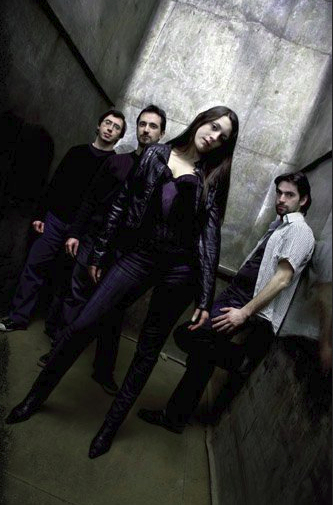
Cinica 3

In art as in life, sometimes execution and ideals can occupy adjacent squares. That is rare, but it does happen sometimes. Think of Jeff Buckley, or Soul Asylum. When it happens, the music creates a mold of its own. And the musician ends up in a position that was perfectly defined by Cat Stevens in the song “Sitting”: “Sitting on my own not by myself, everybody’s here with me / I don’t need to touch your face to know, and I don’t need to use my eyes to see”. All senses but one are rendered superfluous because the power of sound conveys all there is to convey. It is the biggest form of communion between an artist and his public.

Yet, that is not the norm. In the same way that one has to renounce to some (or many) dreams in order to succeed in life, any performer that wants to make it has to sacrifice that ability to stand alone in the most crowded of places (yet always present and seemingly reachable to everybody) and gain a kind of immediacy that in the end disconnects him from those who cared about him, and that he cared about.

I am under the direct impression that many Uruguayan bands do not break into the big time internationally because not many of them are ready to make these sacrifices, compromises or whatever you want to call them. We are a small country, and the sense of unity is very strong – far, far more than some like to admit. There are unwritten rules and lines to toe that actually cross our geographical borders. Any Uruguayan artist crosses a single one of these, and the rest of us look askance on him for evermore.

It is difficult not to think about that when running through the songs any Uruguayan band records for its debut, and wonder whether or not they will reach the end of the process with the same frame of mind they had started out. In the case of Cínica, its first EP (to be self-funded and self-released by the band) will have four original compositions, and one of these (“Panacea”) is also going to be featured in an acoustic version. The remaining songs are “Salvación” [Salvation], “Conciencia” [Conscience] and “Velo Frío” [Cold Veil]. The music is colored with the melodic canvass of a band like Dream Theater, and intermittent brushes of Pink Floyd are used to decorate the remaining spaces.

On the whole, the playing is as tight as that of any band that has been around for some time (Cínica first got together in 2008) I was particularly pleased with the work of the lead guitarist and the drummer (Marcelo Simonetti and Manuel Kastanas respectively, the two founding members of the band). The guitar is suitably stinging and the way the drums are pounded makes me think of a heart that is flayed but that refuses to stop, accelerating when the lyrics require it (listen to the chorus of “Salvación” [Salvation] for a clear example). The combo is rounded up by singer Victoria Campbell and Marcelo’s brother Gonzalo in bass. Victoria’s vocals are focused, and Gonzalo gallops along to the beats set by Manuel pleasurably enough. Marcelo also sings backup, and the first lines of “Conciencia” [Conscience] are actually sung by him.

Both “Salvación” and “Conciencia” are studies on the perils of submissive acceptance in which the catharsis is brought by the instruments, but my personal favorite from these sessions is “Panacea”, maybe on the strength of the intimidating vocals. The sound also seems even more fleshed out than in the other cuts, with the song bearing the most refined introduction from the whole set.   Continue reading

Cínica (Uruguayan Unsigned Artist) – Part 1: Profile & Interview

It fills me with immense joy to officially inaugurate the section of MusicKO devoted to Uruguayan artists that are yet to find a record company.
The first band to be featured is Cínica, from my hometown of Montevideo.
This is the first part of the article, here you can read some basic band information and the answers to the questions I put their way. And you can read my opinion regarding their music in part 2. Of course, you can listen to it here.

An enormous “thank you” to Marcelo, Victoria, Gonzalo and Manuel for their time and enthusiasm.

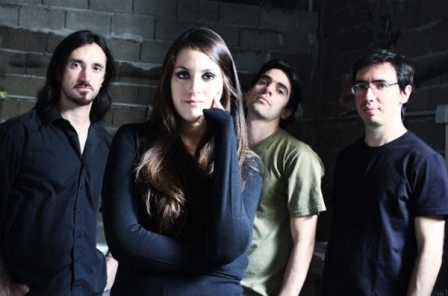
Cinica


Band Information

Name: Cínica

Genre: Alternative Metal

Band Members:

Victoria Campbell – Vocals
Marcelo Simonetti – Guitars/ Backing Vocals
Gonzalo Simonetti – Bass Guitar
Manuel Kastanas – Drums

Been Together Since: June 2008

Some Questions

How would you capture the essence of your band in words?

If we’re talking specifically about the band, we could say that we have a great chemistry that is evident if you ever see us onstage. That chemistry is also felt when it comes to writing and giving shape to new songs. We all come from different styles, and in our opinion that is a plus when playing and composing. The resulting music has a mix of various flavors, but always with metal and hard rock at its root.

Are you trying to make a “new” artistic statement as far as Uruguayan music goes? Or will you just let history play its role?

The band started as two friends who met and played for fun, and it developed from that. It got more and more serious, and it eventually grew into a full band. We’ll try to play the music we like and reach out to the most people we can. We know our music has things in common with other bands but we like to think the combo is pretty unique in this country. So time will tell.

How does your music fit in global terms, IE what perception will a person who is located at the opposite end of the world have of it?

In spite of the language (we agreed from the very beginning that the lyrics would be in Spanish) our music could be heard all over the world. We don’t add (yet) elements that have exclusively Uruguayan roots like Candombe or Tango to our music. Most of our lyrics are also about universal issues – IE, issues that anyone could relate to. Continue reading

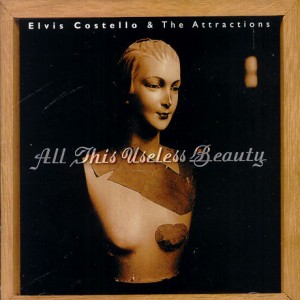
All This Useless Beauty (Elvis Costello) – Album Review

"All This Useless Beauty" Was The Final Album Elvis Costello Cut With The Attractions

"All This Useless Beauty" Was The Final Album Elvis Costello Cut With The Attractions

Costello’s artistry was in permanent evolution during the mid-90s. Learning to write music at the start of the decade was the first of many events that led him to reconsider his position as a performer and a composer. In 1995 he released a disc devoted from start to finish to covers. The title of the album was “Kojak Variety”, and it felt more like a resume than anything else. There was only one true gem, namely the version of The Kinks’s “Days” (a little known non-album side that is often packaged as a bonus on reissues of “The Village Green Preservation Society” today). And in 1996, after having given us the chance to glance at those artists whose music spoke to him in one level or the other, Costello swapped sides and looked at how he spoke to other artists. He ran through songs he had written for others to perform, and decided to interpret them for what was to be the final studio album with The Attractions: “All This Useless Beauty”.

At the time, many critics did not get the point. The charge was that Costello was running out of steam, hence his decision to play other people’s material. Now, more than fifteen years later we know that Costello was not really running out of steam. Rather, he was accumulating steam for an unbridled return. He wasn’t empty – he was almost half-full by then. He let it all grow and grow inside of him, and when the time came he ventured forth again without breaking stride with albums like “The Delivery Man”, “Il Sogno” and “Momofuku”.

But that was to come later. If we situated ourselves back in 1996, what we had was a disc made up of songs written for others like “Complicated Shadows” (composed for Johnny Cash) and “All This Useless Beauty” (penned for June Tabor) along with collaborations like “The Other End Of The Telescope” (written with Aimee Mann, and originally issued on ‘Til Tuesday’s album “Everything’s Different Now”) and “Shallow Grave”, a leftover from the writing sessions with Paul MacCartney.

Surprisingly for songs that came from so many sources and that were meant for so many dissimilar destinations, the album had quite a pronounced sense of unity. Of course, some songs were altered in order to suit Elvis’ sound – “Complicated Shadows” was done as a loud rocker, and a countrified version was not to surface until “Secret, Profane & Sugarcane” saw release in 2009.

“All This Useless Beauty” had a predominance of ballads and mid-paced cuts. The exceptions were “Complicated Shadows”, the rockabilly-oriented “Shallow Grave” and the exciting “You Bowed Down” (grossly omitted on “Extreme Honey”). This stood in direct contrast with “Brutal Youth”, a disc that was defined by songs in which Costello revisited his roots. There is only one tune on “All This Useless Beauty” that could have fitted on the previous disc, namely “Starting To Come To Me”. But if the energy was what characterized “Brutal Youth”, a true refinement would be the key note of “All This Useless Beauty”. And that refinement didn’t just boil down to the actual performances being tamer.  Mitchell Froom was no longer acting as Costello’s producer. That was a defining factor. Continue reading

SingAndStudy – Learn A Language By Listening To Songs And Playing Word Games

SingAndStudy

Name: Sing And Study
URL: http://www.singandstudy.com

For students of foreign languages, songs are one of the perfect frameworks for capturing new vocabulary. The reasons are obvious: songs lasts only a couple of minutes, and some sections repeat themselves over and over. And you have a melody to begin with – a melody that can dote whole segments of the composition with instant catchiness, if not the whole song.

I already reviewed one site for learning languages using videos, but this one is a bit different. Named Sing And Study, it stands as a (paid) Adobe application that you download and launch from your desktop. This application will let you create word games with these videos that you like. That is, you will define which words are missing from the lyrics as the song is playing. This has the immediate advantage of letting you set the difficulty level as specifically as you want. A song can be suited to just anybody, since you will determine what will be removed from where.

For instance, you could take “Like A Rolling Stone” and make filling the gaps something easy:

You never _____ around to see the frowns on the jugglers and the clowns
When they all come down and did _____ for you
You never _____ that it ain’t no good
You shouldn’t let other people get your kicks for you
You used to _____ on the chrome horse with your diplomat
Who carried on his shoulder a Siamese cat
Ain’t it _____ when you discover that
He really wasn’t where it’s at
After he took from you everything he could steal Continue reading