The Decision Of The Who To Carry On Without Keith Moon

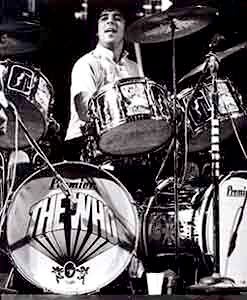
Keith Moon Playing His Customized Premier Drum Kit

Keith Moon Playing The "Pictures Of Lily" Drum Kit

Was there ever a band in which each individual member was more irreplaceable than The Who? I frankly don’t think so. As such, their decision to carry on when Keith Moon died in 1978 must stand as one of the most debatable in the history of rock & roll. People often claim they did it for the money, and that was it. But there were a couple of aspects which should not be dismissed out of hand.

First thing first – by that point The Who were far more than 4 friends who gathered together to play on weekends. They employed more than 40 individuals on the whole. They had a recording studio, a fleet of trucks, their endless roadies… They were not exactly a corporation, but they were quite close. If they had disbanded then, that would have been a considerable number of people on the dole again.

A parallel is drawn with John Bonham’s death in 1980. When that happened, Zeppelin disbanded immediately. Pete Townshed said there was no comparison – Zeppelin was in a very active schedule when that happened, whereas The Who were semi-dormant. But it is clear that The Who might have come across as betrayers more markedly because of Zeppelin’s decision. Continue reading
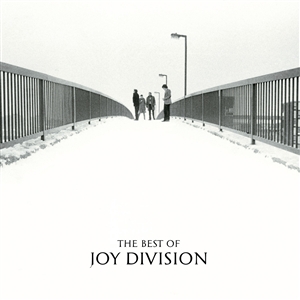
The Best Of Joy Division – Compilation Album

"The Best Of Joy Division" Was Released in 2008

"The Best Of Joy Division" Was Released in 2008

Released in 2008, this is an excellent compilation. But to get the main niggle out of the way once and for all: Joy Division was to release an EP and 2 LPs in the years they were together. The 2 albums fit one CD easily, so that coming up with a “Best Of” album which has about 50 minutes of music is always going to be objected to by many. In this particular case, the compilers made the blunder of including an instrumental track (“Incubation”) that is extraneous to the usual spark of the band, which was dependent on Curtis delivery both in terms of content and form.

There, that was the only negative thing that could be said about this anthology. Because the cuts that did make it to the CD are among Joy Division’s finest compositions, conveying in equal measure the palpitating rage and frustration that lay behind Curtis haunted glance, and the melodically ferocious approach of the band. Starting with “Digital” (one of the most delectable paranoid tirades I ever listened to) and ending with “Isolation”, the album is a perfect snapshot of what made the band so unique and (above all) so influential for generations to come.

The first three numbers in particular work like nothing else, as “Digital” is followed by “Disorder” and “Shadowplay”, two emblematic Joy Division songs. The album also includes the hit “Love Will Tear Us Apart”, “Heart & Soul”, the maniac “She’s Lost Control” and a song that makes me think of Costello’s “Radio, Radio”, only that the approach is obviously far removed. The song is called “Transmission”, and while Costello’s number deals with the way the industry dominates the airwaves, Curtis’ song takes a more personal way through and showcases the effect of what is played, not the role of the ones who decide what does get played. Continue reading

Who Are You (The Who) – Album Review

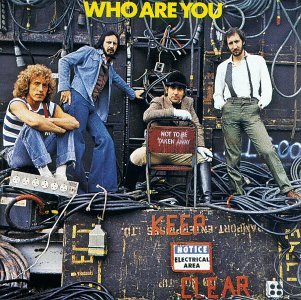
The Cover Of Who Are You Has True Tragic Relevance - Keith Moon Was To Die Shortly Before The Album Was Released

The Cover Of Who Are You Has True Tragic Relevance - Keith Moon Was To Die Shortly Before The Album Was Released

The final Who album featuring Keith Moon is a mostly distinguished way for the original lineup to bow out, although there are many particularities that make the LP a disc like no other within their catalog. First thing first: Moon has lost a great deal of ability, to the point that he couldn’t play “Music Must Change” (Pete’s footsteps set the basic rhythm). He does manage to drum adequately enough on “Sister Disco” and the popular title track. He also puts up a sparky performance all through “Guitar And Pen”. But his magic skills and touch are missing.

In second place, Pete emphasizes notes over chords for the first time in their career. That doesn’t make the album any better or worse than other Who offerings. It just makes it a bit peculiar. And structurally speaking, he has Roger sing a recitative lyric on “Guitar And Pen”. The one song in which they had done this before was “Helpless Dancer“, only that the vocal is far, far campier this time around. “Helpless Dancer” was notably more measured and (if you wish) less theatrical.

Besides, out of 9 songs only six are penned by Pete. The remaining three come from an aborted opera John had tried to assemble (“905” and “Had Enough”), while he serves up the loud “Trick Of The Light” (about a man falling in love with a prostitute). But this time around, he lets Roger take the lead. He only sings “905”. He would sing “Trick Of The Light” live, though:

The main value of this album is the actual content of the songs, as the lyrics deal with artists and their never ending struggle to remain evergreen and motivating to those who follow them. This is evident on “Guitar And Pen” (“never spend your guitar and your pen”), “New Song” (“we sing the same old song with a few new lines/and everybody wants to cheer it”) and the ambitious “Music Must Change”.

Continue reading

Captain Fantastic & The Brown Dirt Cowboy (Elton John) – Album Review

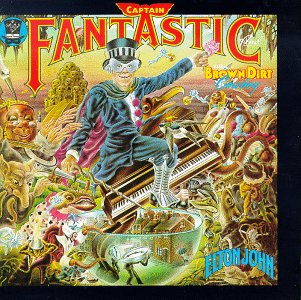
The Cover Of "Captain Fantastic & The Brown Dirt Cowboy" Was Drawn by Graphic Artist Alan Alrdige

The Cover Of "Captain Fantastic & The Brown Dirt Cowboy" Was Drawn by Graphic Artist Alan Aldridge

Notwithstanding all his successes, even by 1975 Elton was a somehow enigmatic figure. Many doubts were to be dispelled when this record was released. It was an autobiography of sorts, chronicling Elton and Bernie’s early stint as paid writers (“Bitter Fingers”) and the eventual forming of a true brotherly bond, culminating in the recording of the “Empty Sky” album.

The music is uniformly good, with Elton backed by his best ensemble ever (the classic band plus Ray Cooper on percussion). His voice was never sharper, and his piano skills shaped the melodic contour of the record with his usual fire.

It is also the one “classic” Elton John album whose lyrics meet with unanimous approval. Bernie did an excellent job here, painting vignettes about ennui (the Queen lookalike “Better Off Dead”, the orchestrated “Wake Me When The Whistle Blows”), the decadence of the rock & roll scene (“Tower Of Babel”) and a moving reflection on intent and dreams named “Curtains”. Continue reading

The Traveling Wilburys Vol. 1 – Album Review

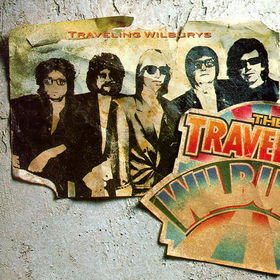
The Traveling Wilburys' First Album

The Traveling Wilburys' First Album

The Wilburys were to release two albums of original compositions during their brief time together. While both are clearly more than a respectable listen, the first one is unanimously hailed as the Traveling Wilburys album.

Topping and tailing the record are the two tunes in which every member sings something at a point or other of the song. These are the Harrison-penned “Handle With Care” and the country-happy “End Of The Line”. The former seems like a combination made in heaven, as Harrison basically sings the lead during the verses, and then Roy Orbison sings a bridge that leads into a sing-along chorus by the rest of the band. Orbison’s contribution (a quavering plea) is a moment which moves me personally, and I bet many of those who listen to the song feel the same way. On the other hand, “End Of The Line” is a very uplifting way to close the record, and its message of optimism is all the more compelling because it feels incredible genuine – even Dylan sings like he truly means it. And those might as well have been his darkest years, keep that in mind.

Speaking of Dylan, he contributes a narrative which resembles “Lily, Rosemary And The Jack Of Hearts” in terms of content and “Hurricane” in terms of structure. It is named “Tweeter And The Monkey Man”, and some fans go as far as to call it one of his best songs from the period. The song is the penultimate track on the album, and it is the one and only composition that goes over the 5.00 mark. The rest all clock at 3.00 on average. Continue reading

The Who By Numbers – Album Review

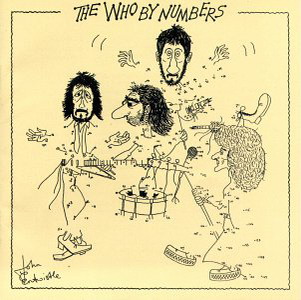
John Entwistle Drew The Cartoon. Try Connecting The Dots - It Works!

John Entwistle Drew The Cartoon. Try Connecting The Dots - It Works!

In the ’70s, music was characterized by an inner conflict that tore at ideals and hurled them against the blackest confines of the human psyche. As a seeker of truth, Pete Townshend surely would have a lot to say. The Who was always – always – there in times of need. The album The Who were to release after Quadrophenia was to expose Pete’s vulnerabilities like nothing else. It was him who needed someone. And the horrible realization that he was not finding that person or people within his band was what listeners were to come across on “The Who By Numbers”.

The setting in which the album was conceived was as troublesome as the ones in which “Who’s Next” and “Quadrophenia” came to the world. This time, Roger and Pete were playing verbal ping pong on the press, and their views on The Who (as entertainers and as artists) were never painted in such black and white terms before or since.

Pete’s already-manifested impression that the band was caricaturing itself had entrenched by this point. His new set of songs dealt with that in a tortured way. The one jovial tune on offer was to be “Squeeze Box”. It was to become a Top 20 hit, in fact. That was certainly disheartening – something truly akin to another brick in the wall of vacuity.

A sense of futility populates the album: Pete questions the relationships with his fans and friends at every turn, and the facades he always studied were becoming far, far too brittle. Everybody could see through disguises by this point. Continue reading

Gutterflower (The Goo Goo Dolls) – Album Review

Gutterflower's Front Cover

Gutterflower's Front Cover

“Gutterflower” was to be the first album the Goo Goo Dolls released after the acclaimed “Dizzy Up The Girl”, the CD that gave us “Iris” and “Slide”. This time around the tone is much starker because John Rzeznik was going through a divorce, and broken sentiments surface at every turn. Leaving aside these songs about disillusionment and loyalty lost, there are two songs that describe the way he felt when moving from Buffalo to LA. They are the single “Big Machine” and “What A Scene”.

The other singles were to include “Here Is Gone”, the closest to the hit formula they had established in the previous record, and “Sympathy”. “Sympathy” is one of the few all-acoustic songs that they were to release as a single, and it is equally enticing on the album as it is when listened to on its own. The song treats disenchantment like the remaining tunes within the album, wondering in which measure the failure of a relationship is down to each person. The conclusion seems to be that both are equally to blame, yet they are incapable of admitting it. Nietzsche used to say that the one who loves the most is the most damaging person since he or she tends to request impossible thing from his/her loved one at every turn. And the majority of songs on offer here (“Think About Me”, “What Do You Want”, “Truth Is A Whisper”) do nothing but bring that to mind time and again.

On the other hand, Robby offers up 4 songs. They mostly reinforce the overall mood of the album (“You Never Know”), yet he also contributes the uplifting “Up, Up, Up” and “Smash”. But on the whole, the album feels like Johnny’s show. Robby songs are also shorter, and it is John the one who closes the album with “Truth Is A Whisper”. Continue reading

The World Won’t Listen (The Smiths) – Album Review

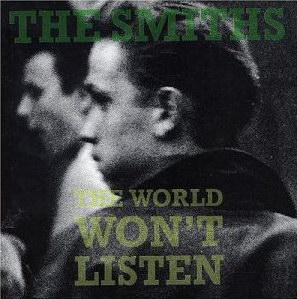
The World Won't Listen

The World Won't Listen

This was the second compilation of A-sides, B-sides and rarities the Mancunian outfit released in its career. As you know, the first one was “Hatful Of Hollow“. In this case, the compilation has something of a broader appeal as there is a fair slice of non-album singles featured, and these include the crucial “Panic”, “Ask” and “Shoplifters Of The World Unite”. The single version of “The Boy With The Thorn In His Side” is part of the compilation, too. And there are no radio sessions this time around.

Something that you can find here that was absent from “Hatful Of Hollow” is a handful of instrumental tracks. There are two of them: “Oscillate Wildly” and “Money Changes Everything”. Continue reading

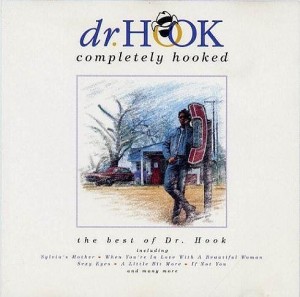
Completely Hooked (Dr. Hook) – Compilation Album

"Completely Hooked" Is One Of The Many Dr. Hook Compilations Available

"Completely Hooked" Is One Of The Many Dr. Hook Compilations Available

Originally known as “Dr. Hook & The Medicine Show”, this band had a truly eclectic career. Their output can be divided in three main groups: 1) Comedy numbers, 2) Disco songs and 3) Ballads. All of these genres are impinged with a country sensibility, and this is one of their many compilations. It was released in 1992, and the 20 songs on offer map out these three genres more than adequately, stopping in each one for long enough without ever going too far.

The comedy numbers are mostly penned by Shel Silverstein, and they are absolutely hysterical. Located mainly at the beginning of the disc, they include “The Millionaire”, “Everybody’s Making It Big But Me” and the popular “Cover Of The Rolling Stone”. What many people don’t realize is that in addition to composing these comedy numbers Silverstein did also come up with many of the band’s ballads, such as the excellent “More Like The Movies” and “A Couple More Years”.

The disco songs included on this compilation are “Walk Right In”, “You Make My Pants Wanna Get Up And Dance” and “Sexy Eyes”. They are entertaining and to-the-point, but I would say that both the ballads and the comedy songs are more endurable. Continue reading

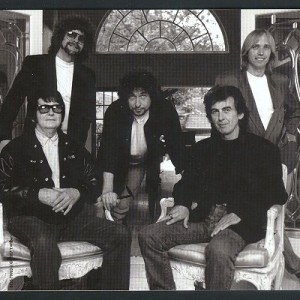
The Traveling Wilburys – General Introduction

The Traveling Wilburys

The Traveling Wilburys

The Traveling Wilburys have gone down in history as one of the most enjoyable and – above all – genuine supergroups ever. The key to their appeal might lie in the fact that the five band members were excellent friends who knew how to collaborate and complement each other’s musical stance, stopping exactly at the line that separated one from the other. They worked with each other without intruding an inch, and without giving an inch. Such chemistry is rare, and the fact that five different individuals could have it at the same time goes some way into explaining the Wilburys’ effectiveness.

Everybody knows who they are, but in case you are just discovering them: George Harrison, Bob Dylan, Jeff Lynne, Tom Petty and Roy Orbison.

They came together when Harrison needed to record a B-side, and the resulting song (“Handle With Care”) was something that even the biggest undiscerning person in the industry would have regarded as far, far more than a B-side. Two full-length collaborations were to ensue, titled “Volume I” and “Volume III”. Continue reading