En Una Lágrima (RostbiF) – Video Clip

I’d like to share with you the first video clip created by one of the Uruguayan bands I collaborate with, RostbiF. The guys hail from Nueva Helvecia (an inland town) and this particular song has one of the very first lyrics in Spanish that I ever wrote. It is called “En Una Lágrima” [In A Tear].

I also penned two other lyrics for them – “Rebellion Winds” and “These Eyes”. You can listen to all of these songs in full on their PureVolume profile.

This is the video clip for “En Una Lágrima”. I have attached the lyrics below along with a translation into English.

Of course, look for a full profile and an interview with the band on MusicKO soon! Continue reading

Salvando La Distancia (Sordromo) – Uruguayan Music

"Salvando La Distancia" Was Issued In 2004, And It Was A Gold Record By The End Of The Year

"Salvando La Distancia" Was Issued In 2002, And It Was A Gold Record By The End Of The Year

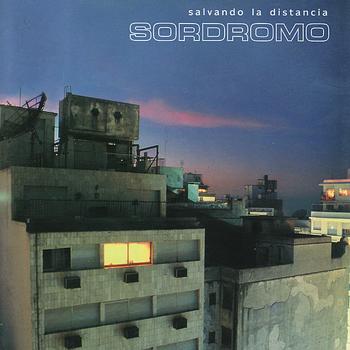
A Uruguayan band that combined rock instrumentation with some electronic beats and scratches in quite an engaging way, Sordromo released “Salvando La Distancia” [Closing The Distance] in 2002. To me, the album (issued by Bizarro Records) exemplified how their approach (which yielded very good results in terms of singles) could be a little monotonous over an extended work. In the case of “Salvando La Distancia”, the monotony was aggravated by the solipsistic nature of the lyrics – all of the songs (with the exception of “Música Fea” [Ugly Music] and “Ventanas” [Windows]) were romantic fare. The combination could be a little debilitating sometimes, specially during the mid-section of the album.

Still, the disc had more than a few remarkable compositions – and then some. The first five tracks in particular were praiseworthy, with the singles “Las Cosas Del Querer” [The Way Loving Is] and “Como Un Sueño” [Like A Dream] achieving a phenomenal amount of exposure in Uruguayan radio. The two songs were also prime examples of the band’s marriage of rock instrumentation and electronic motifs. But the best example of Sordromo’s signature sound found on the disc was to be “Salvaré” [I Will Close], a song that mixed strangled guitar ruminations and matching electronic beats under a lyric dealing with separation akin to disintegration, and the will to overcome it come what may.

And the songs “A Solas” [Alone] and “Ventanas” [Windows] were quite anthemic, even if the lyrical devices they contained were nothing new. A sample line from “A Solas”: “A solas / con todos / duele / sé que no te gusta estar a solas con otros / se hace tan difícil cuando estás a solas” [Alone with everybody / I know you don’t enjoy being alone with others/ it gets so hard when you have to be alone]. The song is more than acceptable on the whole, though, with the pervasive drums making it resonant from the very first verse already. And “Ventanas” [Windows] dealt with the importance that even just a tiny amount of support brings to those who are abated, effectively underlining the title of the album and highlighting how some of the biggest divides actually exist between people who are close in physical terms. Continue reading

Cínica (Uruguayan Unsigned Artist) – Part 2: The Music

(Read Cínica’s profile in the first part of this review)
Cinica 3

In art as in life, sometimes execution and ideals can occupy adjacent squares. That is rare, but it does happen sometimes. Think of Jeff Buckley, or Soul Asylum. When it happens, the music creates a mold of its own. And the musician ends up in a position that was perfectly defined by Cat Stevens in the song “Sitting”: “Sitting on my own not by myself, everybody’s here with me / I don’t need to touch your face to know, and I don’t need to use my eyes to see”. All senses but one are rendered superfluous because the power of sound conveys all there is to convey. It is the biggest form of communion between an artist and his public.

Yet, that is not the norm. In the same way that one has to renounce to some (or many) dreams in order to succeed in life, any performer that wants to make it has to sacrifice that ability to stand alone in the most crowded of places (yet always present and seemingly reachable to everybody) and gain a kind of immediacy that in the end disconnects him from those who cared about him, and that he cared about.

I am under the direct impression that many Uruguayan bands do not break into the big time internationally because not many of them are ready to make these sacrifices, compromises or whatever you want to call them. We are a small country, and the sense of unity is very strong – far, far more than some like to admit. There are unwritten rules and lines to toe that actually cross our geographical borders. Any Uruguayan artist crosses a single one of these, and the rest of us look askance on him for evermore.

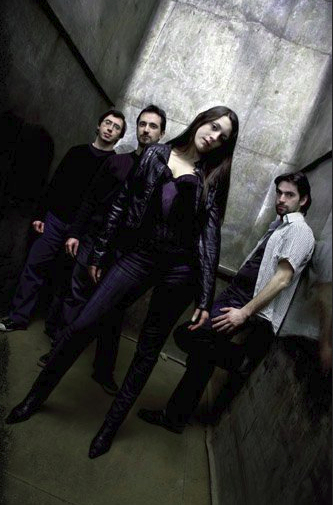
It is difficult not to think about that when running through the songs any Uruguayan band records for its debut, and wonder whether or not they will reach the end of the process with the same frame of mind they had started out. In the case of Cínica, its first EP (to be self-funded and self-released by the band) will have four original compositions, and one of these (“Panacea”) is also going to be featured in an acoustic version. The remaining songs are “Salvación” [Salvation], “Conciencia” [Conscience] and “Velo Frío” [Cold Veil]. The music is colored with the melodic canvass of a band like Dream Theater, and intermittent brushes of Pink Floyd are used to decorate the remaining spaces.

On the whole, the playing is as tight as that of any band that has been around for some time (Cínica first got together in 2008) I was particularly pleased with the work of the lead guitarist and the drummer (Marcelo Simonetti and Manuel Kastanas respectively, the two founding members of the band). The guitar is suitably stinging and the way the drums are pounded makes me think of a heart that is flayed but that refuses to stop, accelerating when the lyrics require it (listen to the chorus of “Salvación” [Salvation] for a clear example). The combo is rounded up by singer Victoria Campbell and Marcelo’s brother Gonzalo in bass. Victoria’s vocals are focused, and Gonzalo gallops along to the beats set by Manuel pleasurably enough. Marcelo also sings backup, and the first lines of “Conciencia” [Conscience] are actually sung by him.

Both “Salvación” and “Conciencia” are studies on the perils of submissive acceptance in which the catharsis is brought by the instruments, but my personal favorite from these sessions is “Panacea”, maybe on the strength of the intimidating vocals. The sound also seems even more fleshed out than in the other cuts, with the song bearing the most refined introduction from the whole set.   Continue reading

Cínica (Uruguayan Unsigned Artist) – Part 1: Profile & Interview

It fills me with immense joy to officially inaugurate the section of MusicKO devoted to Uruguayan artists that are yet to find a record company.
The first band to be featured is Cínica, from my hometown of Montevideo.
This is the first part of the article, here you can read some basic band information and the answers to the questions I put their way. And you can read my opinion regarding their music in part 2. Of course, you can listen to it here.

An enormous “thank you” to Marcelo, Victoria, Gonzalo and Manuel for their time and enthusiasm.

Cinica


Band Information

Name: Cínica

Genre: Alternative Metal

Band Members:

Victoria Campbell – Vocals
Marcelo Simonetti – Guitars/ Backing Vocals
Gonzalo Simonetti – Bass Guitar
Manuel Kastanas – Drums

Been Together Since: June 2008

Some Questions

How would you capture the essence of your band in words?

If we’re talking specifically about the band, we could say that we have a great chemistry that is evident if you ever see us onstage. That chemistry is also felt when it comes to writing and giving shape to new songs. We all come from different styles, and in our opinion that is a plus when playing and composing. The resulting music has a mix of various flavors, but always with metal and hard rock at its root.

Are you trying to make a “new” artistic statement as far as Uruguayan music goes? Or will you just let history play its role?

The band started as two friends who met and played for fun, and it developed from that. It got more and more serious, and it eventually grew into a full band. We’ll try to play the music we like and reach out to the most people we can. We know our music has things in common with other bands but we like to think the combo is pretty unique in this country. So time will tell.

How does your music fit in global terms, IE what perception will a person who is located at the opposite end of the world have of it?

In spite of the language (we agreed from the very beginning that the lyrics would be in Spanish) our music could be heard all over the world. We don’t add (yet) elements that have exclusively Uruguayan roots like Candombe or Tango to our music. Most of our lyrics are also about universal issues – IE, issues that anyone could relate to. Continue reading

Auto (Mateo Moreno) – Uruguayan Music

"Auto" Is The First Solo Album Issued By Former NTVG Member Mateo Moreno

"Auto" Is The First Solo Album Issued By Former NTVG Member Mateo Moreno

The debut of Mateo Moreno (the former bass player for No Te Va Gustar, and one of its founding members) hit the shelves in Uruguay in 2009. Mateo is actually a multi-instrumentalist, and he handled the majority of guitars (including charangos) and also some percussion on his first solo offering. He also arranged all woodwinds and strings.

I became interested enough to buy this album upon listening to its first single (the outstanding “Simple”) on the radio. The song is a true capsule of sensibility and sensitivity in which different facets of affection are studied as if they were in the same plane, concluding in each case that love is a simple manifestation in itself. You can try to overcomplicate it, and you can also try to make it stand even simpler than it is. It will be all to no avail.

“Simple” is the best cut of the whole disc, and I also have a lot of time for the unbridled folk of “Souvenir” and the moody “Princesa Oscura” [Dark Princess], a song that mixes electronic passages with autochthonous sections in a surprisingly spontaneous way. And those who long for Mateo’s own evolution of the sound of No Te Va Gustar can always check out “Anestesiandote” [Anesthetizing Yourself], the best exponent of rock & roll the disc has to offer. Continue reading

Uruguayan Unsigned Artists – General Introduction

Uruguay

It is often said that Uruguay is a country brimming with talent, and that not enough outlets for such creativity exist within its reduced geographical boundaries. I don’t know if the word “brimming” is 100 % accurate, but I can tell you that based on the bands I have worked with and the musicians I have met as I did the rounds, there is a significant share of talent that is not actually on anybody’s radar.

I have decided to start this section within MusicKO in order to give these voices that might go unheeded otherwise a spot where they can communicate what they do, what they believe in and what they angle for.

The only requisites for being listed here are:

1)    Being an Uruguayan artist
2)    Not being signed to any label within the country
3)    Having recorded at least four demos (for me to evaluate)

If you meet these criteria, you can get in touch with me. The address is (garbled on purpose):

emiliomusicko [at] gmail [dot] com

Although my favorite genres are rock, pop and punk I am more than willing to listen to other styles.

I will try and feature one or two “new” bands per week.

Cheers,

Emilio

Días Lúcidos (Lapso) – Uruguayan Music

"Días Lúcidos" Was Lapso's Sophomore Effort

"Días Lúcidos" Was Lapso's Sophomore Effort. It Was Better-produced Than Its Predecessor, And The Album On The Whole Feels Like A More Mature Work.

Lapso [Lapse] is an alternative rock band that hails from my hometown, Montevideo. Its sound has been nurtured mainly by bands such as the Red Hot Chili Peppers and Incubus. The first CD by a Uruguayan rock band that I ever bought was this one, actually, mainly on the strength of the single “Volver Atrás” [Turn Back]. It remains my favorite rock song by a Uruguayan band even after all this time.

“Días Lúcidos” [Lucid Days] was to be their second (and so far latest) album. It was first issued in 2006 by Bizarro Records. The band comprises Andrés Bianco on guitar, Guido Boselli on drums and Andrés Miranda on bass. The singer is Gonzalo Bouzout.

The album has 12 songs that are characterized by a focused view on human beings and the way they relate to each other as a ramification of the way they can (and can not) cope with themselves to begin with. This theme is announced by “Humano” [Human], the first track, and songs like “Mediocre” deal with aspirations and the lack of them in terms that some might deem a bit prosaic but which are effective nonetheless.

The single “Más Que Ayer” [More Than Yesterday] is certainly a high point, with a great arrangement and compelling dynamics that turn it into the most likeable moment on the whole CD. Continue reading

Laberinto (La Trampa) – Uruguayan Music

"Laberinto" Was La Trampa's Fifth Album. It Was Issued In 2005 To Good Sales And Mostly Positive Reviews.

"Laberinto" Was La Trampa's Fifth Studio Album. It Was Issued In 2005 To Good Sales And (Mostly) Positive Reviews.

“Laberinto” [Labyrinth] constitutes the fifth album of original material released by Uruguayan rockers La Trampa. Alongside La Vela Puerca, No Te Va Gustar and Buitres the band possesses immense popularity in the country; and like the aforementioned bands, it has been making inroads in the Argentinean market.

This time around there is a strong presence of both Uruguayan and Argentinean folk music in the compositions (all penned by guitarist Garo Arakelian), which coupled with the traditional approach of the band results in a captivating listening experience. The entrance to this particular labyrinth is not that unusual, though: “Puente De Estrellas” [Bridge Of Stars], “Las Décimas” [The Ten-line Stanzas] and “El Poeta Dice La Verdad” [The Poet Tells The Truth] are classic La Trampa, competing with the best moments of preceding albums such as “Caída Libre” [Free Fall] (2002).

However, come the fourth selection, a “zamba” (an Argentinean rhythm, not to be confused with the Brazilian “samba”) titled “Ronda De Lenguas” [Round Of Tongues] and the thread abruptly disappears, leaving the listener wondering how to proceed. The bands playfully leads him through a maze of gentle songs interspersed with harder-sounding offerings, until “Vagos Recuerdos” [Vague Memories] signalizes the way out. Along the way he is bound to find “Canciones Al Viento” [Songs To The Wind], which combines a measured introduction with an energetic conclusion, emphasizing the will to transcend of the lyrics (“Quiero una canción que vuele cuando ya no vuele yo/Que se haga viento en el aire cuando no respire yo/Quiero un viento que te cante cuando ya no cante yo”) [I want a song that flies when I no longer fly/That becomes wind in the air when I no longer breathe/I want a wind that sings for you when I no longer sing] and the salient “Pensares” [Thoughts], bearing the most realized chorus of the whole album, alongside a pensive guitar solo that complements the lyrics perfectly. Continue reading

Cinco Estrellas (Astroboy) – Uruguayan Music

"Cinco Estrellas" Was Astroboy's Debut EP

"Cinco Estrellas" Was Astroboy's Debut EP

The emergence of a band like Astroboy in the Uruguayan market was understandable. Uruguay’s endemic genres like Tango, Murga, and Candombe have always held little sway over the tastes of youth, whereas popular bands like La Vela Puerca or No Te Va Gustar still fail to strike a chord with listeners weaned on British and American music. Astroboy attempted to bridge that gap with the release of their debut album, a seven-song EP entitled “Cinco Estrellas” [Five Stars]. The EP was issued in 2003.

Verily, they sing in English, and their approach differs from traditional Uruguayan Rock, but problems abound. First of all, they may sing in English, but they do not compose songs in English. It is palpable that the words are devised in Spanish and then translated into English, with little regard for the nuances of each language. This is denoted by the rhymes they resort to (when they do rhyme), and by the rhyme schemes in use – these never move beyond the basic ABCB. And when they do try (as in “Did I Tell You?”), they wind up coupling words like “drowning” with “laughing”. And the lyrics themselves are a drawback, as they are plagued by grammar and syntax problems (I check my meanings/And all my kinds are ways/ That I don’t mind/Yeah!).

Moreover, a tendency to take the easy way out is already pronounced here; some compositions are made up of just one verse and one chorus reiterated throughout the whole song, as in “Fácil” [Easy] and the closing “Time Has Passed” (a bonus track, and the weakest song on offer). Some (minor) confusions between British and American English are also in evidence. But the most egregious aspect is the music itself, wholly derivative of Britpop bands (most notably Oasis). There is a difference between being inspired by something and imitating something; it is a thin line, but Astroboy crosses it gratuitously. From Oasis they also take the attitude and general outlook (especially singer Martín Rivero, who hero-worships Liam Gallagher). Continue reading

El Tiempo Está Después (Fernando Cabrera) – Uruguayan Music

"El Tiempo Está Después" Was Issued In 2004. It Covers Fernando Cabrera's Very First Years As A Solo Artist.

"El Tiempo Está Después" Was Issued In 2004. It Covers Fernando Cabrera's Very First Years As A Solo Artist.

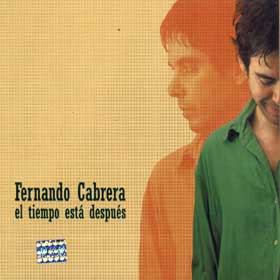
The first Uruguayan album I purchased was this compilation by Fernando Cabrera, and it only makes sense he is the one artist I have chosen to inaugurate this section of MusicKO with.

Born in 1956 in Montevideo, he is one of the most respected composers in the whole country. He performs what we call “Música popular”, a category that is comparable with folk music in English-speaking countries to a considerable extent. His primary instrument is the guitar, and his MO on the whole is not that removed from artists I adore like Elvis Costello, XTC and Richard Thompson in the sense that he is a very distinguished lyricist whose vocal delivery is anything but mainstream, and while that costs him some wider appeal it gives him a certain exclusiveness that make him all the more beloved by his followers.

This compilation was first issued in the year 2004, and it gathers together the best cuts from his first three solo recordings (he had been part of the groups “MonTRESvideo” and “Baldío” during the late 70s and early 80s). These albums are “Autoblues” (1985), “Buzos Azules” (1986) and “El Tiempo Está Después” (1989).

Fourteen tracks are featured. Some are very short, like the opening “Iluminada” [Illuminated] and the set closer “No Te Olvidés” [Don’t You Forget], some rock quite energetically like “Tangente” [Tangent] and “Agua” [Water], and some have a lovely River Plate sensibility such as “La Garra Del Corazón” [The Drive Of The Heart] and “Los Viajantes” [The Travelers], with “La Garra Del Corazón” being actually a tango. But every single composition could be described as (to quote Bobby Darin) true poetry in motion. That is particularly true when it comes to the track that lends its title to the album, which in English is rendered as “Time Comes Afterwards” and the phenomenal “Imposibles” [Impossible Things] and “Pandemonios” [Pandemoniums]. Continue reading