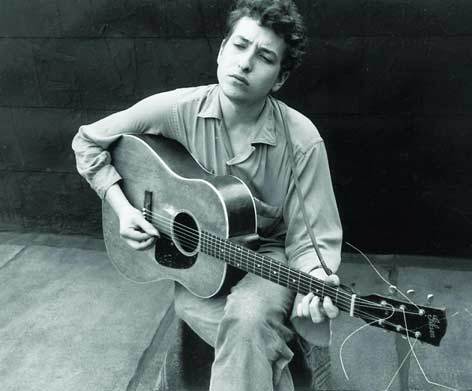
Now It’s Your Chance To Remix Bob Dylan’s Timeless Classic And Win A Trip To South By Southwest In The Process.
This is the day for fans of the gnomic singer/songwriter that also happen to love technology. Sony is currently holding an open competition in which people are invited to remix Dylan’s seminal ‘60s track, “Subterranean Homesick Blue”. The prize? A trip to South By Southwest in Austin next March.
The actual remixing process is done entirely online. A neat interface will let you take Dylan’s vocals along with all the individual instruments, and have your own way with them. And those who are skilled enough will be able to record themselves and bring what they see fit into the mix.
As long as Elvis Costello doesn’t show up and decides to write “Pump It Up Pt. 2”, it should be a very even and enjoyable competition for everybody…
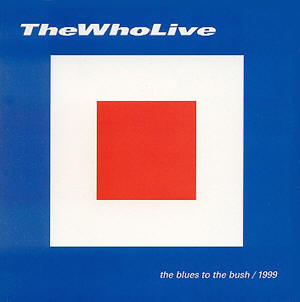
With Performances Culled From Four Different Live Shows, “The Blues To The Bush” Chronicled What Were To Be Some Of John Entwistle’s Final Major Shows With The Who.
Released by the now defunct MusicMaker.com in 1999, “The Blues To The Bush” was a live double album that documented four of the band’s final major shows with John Entwistle. The first two took place at the House Of Blues in Chicago on the 12th and 13th of November, and the other two found the ‘Oo back at home, rocking the Empire Theatre in Shepherd’s Bush during Christmas. The surviving trio (with Pete playing electric guitar from start to finish for the first time since 1982) was augmented by long-serving keyboardist John “Rabbit” Bundrick and no other than Zak Starkey on drums. Zak was actually encouraged to play the instrument as a child by Keith Moon (whom he referred to as “Uncle Keith”), and “The Blues To The Bush” was the first official product in which he could be heard drumming with the band.
The idea was that people could buy the full set or one CD or the other only, and also rearrange the tracks as they saw fit.
The tracklist itself was a predictable selection of straightahead classics along with some curveballs like “After The Fire” and “Getting In Tune” thrown in with a lot of gusto. I must admit I bought the album on their strength alone, and because there was nothing I wanted more than listening to a live version of “You Better You Bet” (I am yet to get my hands on a copy of “Join Together”).
As it turned out, the live “You Better You Bet” was the absolute highlight of an otherwise spotty set.
The two main problems are that: A) The bass is undermixed all the way through, and (I feel awful for saying it, but the truth is the truth) B) Roger’s voice sounds shot on most numbers. Compare the version of “I’m A Boy” featured on this set with the one found on “Live At Leeds”, for example. He only sounds like himself on “You Better You Bet”, and when they unleash warhorses like “Won’t Get Fooled Again”, “Baba O’ Riley” (in which Zak’s performance is second to none) and “My Generation”.
Also, the fact that customers could actually choose which songs to buy (and set down their very own running orders) leads to all tracks fading in and out. That invariably lessens the continuity of the whole album.
At any rate, “The Blues To The Bush” features an extended solo by John Entwistle on the always-astonishing “5.15”. That sets the bar somehow higher – certainly, high-enough for fans of the band to want to have the album.
Obviously, with MusicMaker.com long dead and gone, getting an original copy is harder than not laughing at Liam Gallagher’s recent comments that Beady Eyes is way better than Oasis in its prime. Yet, copies are found on eBay and related marketplaces every now and then. I have seen the amount they retail for, and I frankly wouldn’t pay that much. I got my copy right when the album was issued, and even then I was reluctant to “call it a bargain… the best I ever had”. And not even the fact that “The Blues To The Bush” has become one of the band’s final documents with John Entwistle changes that, I am afraid.
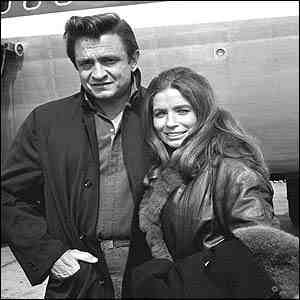
A Picture Of Johnny Cash With His Wife And Savior, June Carter.
OK, I know that asking you to make an effort after all that you must have imbibed and ingested yesternight and try to remember what I wrote about The Johnny Cash Project two months ago is too much. Just click here and read what I posted back there and then about it.
And believe me, there is a very good reason to do that. The Johnny Cash Project is up for a Grammy, no less.
The crowd-sourced clip for “Ain’t No Grave” which is found on the site has been nominated for best short form video.
The nomination is a triumph in itself. The video is taking on monster hits like Lady Gaga’s “Bad Romance” and “Love The Way You Lie” by Eminem and Rihanna. Both clips have more than 200 million views in YouTube each (Lady Gaga’s clip actually moved past the 300 million milestone not so long ago).
Congratulations to filmmaker Chris Milk (the one who dreamed up the whole project) and also to all the people who have already contributed to it, obviously.
Hmm… I think it’s about time I got down to reviewing the country legend on MusicKO, wouldn’t you say? Let me see what I can do before the year comes to a close…
Below You Will Find The Most Popular Songs On Last.fm During 2010
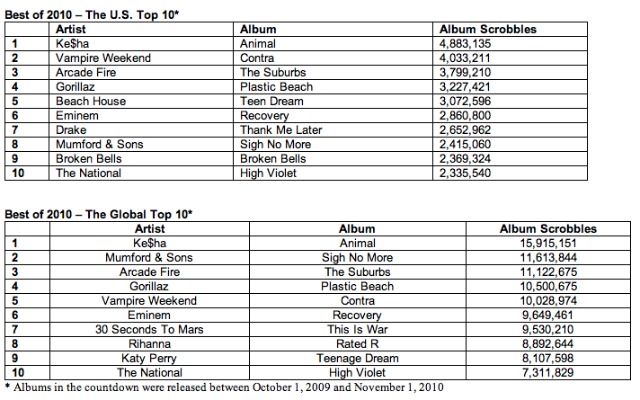
Yes, folks, it is that time of year in which “Best Of” lists start populating the Web. I came across these two today, and I felt like sharing them with you.
They highlight the artists Last.fm users have listened to more intently during 2010. The one on top is devoted to the US, and the other showcases the likes of people the world over. Both have Ke$ha reigning supreme, but that is hardly surprising considering how viral TiK ToK was.
This is as bizarre as it is endearing. Isle Of Tune is for all the people who love music but can’t even play the triangle. On this site, they will be able to come up with songs… by building a city! No kidding.
Isle Of Tune works by having you place elements such buildings, street lamps and trees that actually double as musical instruments (!). That is, once they are in position, these instruments will be played by all the cars that drive past them. Continue reading →
Gustavo "Jack" Doorman Posing With The Undisputed Star Of The Band's Debut Album.
F. Scott Fitzgerald once remarked that life is a process of small ruptures that lead to a tremendous final crackdown. Fitzgerald was one of the gigantic voices of reason in the Jazz Age, an era that many scholars simply remember as “the gaudiest spree” in American history. Like it or not, his insight will always stand in that selected place in which truths that are purely forceful in themselves are found.
What I think, however, is that it is conceivable to look at everything from a different angle. What if life were also a process in which one goes through small significant moments that let him finally discover the definitive moment he wants to be in? I am sure it is not far-fetched to think that a person can form his own perception of anything like that.
Personally, I think I can remember the first time a music performance truly moved me. It was the night Glen Hansard and Marketa Irglova won the Academy Award for the song “Falling Slowly”. That was the central piece from “Once”, a musical ingrained in reality that didn’t deny the deep value of dreams for a single minute.
And what struck me really hard was not only the way they played that night, and the radiant chemistry they displayed onstage. It was the words they spoke as they were given their Oscars.
Marketa said “Fair play to those who dream”. Glen simply remarked “Make art… Make art!”.
That night, it dawned on me that if two independent musicians could take on giants like Melissa Etheridge and Disney and walk away victorious, then maybe it would also become possible for Uruguayan musicians to stand up in non-Spanish speaking markets and succeed on their own terms.
Sure, Uruguayan singer/songwriter Jorge Drexler had won an Oscar himself in 2004 for the song “Al Otro Lado Del Río” [Across The River], but it was a bittersweet moment. He was not allowed to take the stage to play the song. Antonio Banderas and Santana played it, with lots of energy but not a lot of precision. When Jorge was awarded the coveted accolade, he sang a portion of “Al Otro Lade Del Río” accapella. I couldn’t help but wonder if that did nothing but highlight how submissive he had had to be to reach that podium that night and walk away with an Oscar. It all felt a little childish, like a girl who kicks a friend in the shin while his parents are holding him, telling him off for something he had done to her.
But that night in 2007, as those two virtually unknown European musicians had left everybody at the Kodak Theater mesmerized with their interpretative skills and integrity I stood as energized as I could be. If there was ever a moment I felt a sense of true possibility materializing, then that was it. I felt (nay, I knew) Uruguayan musicians would one day be able to stand up on their own two feet, and present their art uncompromisingly to the world.
The independent artist I want to cover today has got me thinking about that, along with the best bands currently active in the Uruguayan scene such as The Bear Season and Casablancas. Doorman is an electronic outfit that takes after the name of its frontman, Gustavo “Jack” Doorman. He writes everything and sings the lead, while the remainder of the band comprises Federico Recarey (bass), Ariel Scarpitta (sequencers), Hangel (drums) and Oscar Naya and Lucas Kanopa (guitars).
The band has already issued an album (“Supermal”, produced by Daniel Anselmi) and it stands as an entrancing mixture of buoyant rhythms and lyrics that are mostly hedonistic, although there is also room for contemplation and sheer regret, as in the song “Sad Situations” (one of their most rock-oriented numbers, and a personal favorite of mine). Continue reading →
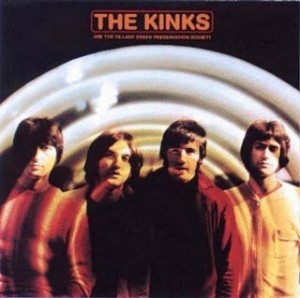
Issued In 1968, “The Village Green Preservation Society” Was The First Album Over Which The Kinks Had Full Creative Control.
Freed from the onerous contract they once had signed with American expatriate Shel Talmy, The Kinks finally could begin pursuing Ray Davies’ vision to the full. The year was 1968, and by that time the band had been banned from entering the US owing to their unmanageable onstage behavior. (The incident in which Mick Avory trounced Dave Davies with his hi-hat and fled as the guitarist lay in a pool of blood was most likely the final straw for the detractors of the band with the risqué name.)
Being barred from playing in the country where the big income was for any performer invariably made Ray look for his themes closer to where he was. And (as I think I have said elsewhere) the man was an all-out nostalgic in any case. There was nothing more coherent to him than looking back and romanticizing. And while the band’s previous record (“Something Else”) had actually indicated that his vision of England was just too settled, it also showcased what a deft describer of characters and incidents he was.
That was the context in which The Kinks’ next album was gestated. Ray took his romanticism to the extreme and single-handedly wrote an album mourning the passing of all these traditions he saw as decidedly British. He focused on the nominal village and turned the whole band into protectors of these traditions, painting one sketch after the other of small town characters and the fate that befell them as they either remained where they were (“Johnny Thunders”) or tried to break into the larger world (“Do You Remember Walter?”) . Of course, the weight of the world was felt on the delicious title track, which (like many others such as “Phenomenal Cat” and “Animal Farm”) had a truly startling childlike quality to it. More than often, you feel as if the narrator has chosen to remain in the verge of innocence, and that he is never going to venture a single inch forwards. And both the songs “Village Green” and “Picture Book” make it clear how disheartening the way ahead is, with the protagonists becoming unable to enjoy either the places they have arrived at, or the places they have come from.
Ray wrote everything this time around (brother Dave had no writing credits, but he had a devilish cameo on “Wicked Anabella”) and he even acted as the record’s producer. If “The Village Green Preservation Society” makes you feel like you are listening to a Ray Davies’ solo album, then that is because you are. That is, you are listening to a single voice throughout. Ray Davies was to begin running the show from this point onwards, and the band was to produce some of its better works under his aegis.
Musically, the album is very delicate, and (personally) I find it quite adorable. There are acoustic guitars aplenty, flutes, droning organs on “Sitting By The Riverside”, a hazy harpsichord that washes over “Village Green”, a number in which Ray opts to recite rather than to sing (“Big Sky”)… Continue reading →
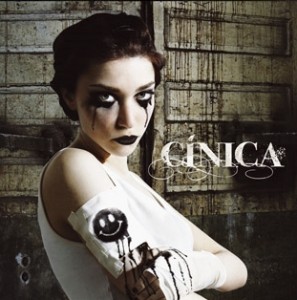
Cínica’s Debut Is A Five-Song EP You Can Download For Free On Their Site
Cínica was the first Uruguayan unsigned artist that I featured on MusicKO, way back in April.
Well, the band has just released its self-titled (and self-funded) debut EP. It has five songs: “Panacea”, “Conciencia” (my personal favorite), “Piso Frío”, “Velo Gris” and an acoustic take on “Panacea” (which closes the disc).
Presented By MTV, The Music Meter Is A Resource For The Discovery Of New Artists
The days in which the popularity of music was measured by how many albums were shifted are not just extinct, they are actually fossilized. Nowadays, the popularity of any piece is judged based on a plethora of factors. The number of views on YouTube is one of these, and so is how frequently the song is streamed on sites like Spotify and Last.fm.
MTV has just released a new site in which all these variables are taken into account, and used to create a chart in which the online buzz around musicians is fully reflected. This chart goes by the name of The Music Meter, and it is updated daily. And learning more about the artists who get featured there is really easy, since tweets and bios are accessed at a click. So, getting acquainted with any performer that you discover through the chart is simplified to no end. Continue reading →