
Twt.fm – Sharing Music With Everybody On Twitter

Twtfm

Name: Twt.fm
URL: http://www.twt.fm

Services for posting your music to Twitter are proliferating, and I think that is something that was to be expected. It has recently been reported by sites like Mashable and TechCrunch that Twitter’s stateside growth has somehow stopped, yet its numbers for international growth have begun showing some interesting patterns. I have already covered a service for tweeting out music, and another one won’t hurt given that this might as well be the year when Twitter will make headlines in every country in the world.

Twt.fm is a characteristic Twitter site even its name, which is short and abbreviated keeping in with the “micro” concept that defines the social sharing platform. The way you use it is easy enough, as all you have to do is login using both your Twitter username and your pass. Once you are in, you have to carry a search based on an artist’s name and the song you want to listen. A preview will be generated, and after listening to it you can generate a track page. This is what you will tweet to all your friends. Continue reading

The Kids Are Alright – Biopic Review

"The Kids Are Alright" Was Directed By Super-fan Jeff Stein. Its Theatrical Release Was In 1979.

"The Kids Are Alright" Was Directed By Super-fan Jeff Stein. Its Theatrical Release Was In 1979.

The music of The Who came from them being one of the truly unique ensembles in the history of music. If there was ever a band with a million tales to tell, it was them. The way those guys were together and constantly at odds was something that their music did not necessarily convey, until one (correctly) interpreted the outrageous volume as a telltale of bottled emotions and anger. But there was also enormous love and belief lying at the heart of it all. And that was something which just had to be told.

“The Kids Are Alright” (1979) was assembled with that objective in mind. The idea was to show what made the band so distinctive, and why it was that their fans were so loyal. The movie itself (directed by a then-young Jeff Stein, and released shortly after Keith Moon died) achieved that aim, but only in a certain sense: it captured their offstage irreverence in full flight by the inclusion of interviews and specials that were shot through the years. Continue reading

Automatic For The People (REM) – Album Review

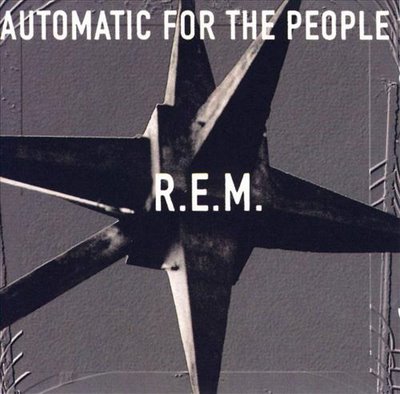
"Automatic For The People" By R.E.M. Year Of Release: 1992.

"Automatic For The People" By R.E.M. Year Of Release: 1992.

The follow-up to the critically-acclaimed “Out Of Time” (1991), “Automatic For The People” (1992) feels like the perfect successor to the previous offering to me. Now a broader scope of themes is broached, and personal compositions such as “Nightswimming” are turned into wider statements about youth and the passing of time. Mortality is also another recurrent topic, with the songs “Try Not To Breathe” and “Sweetness Follows” treading heavy territory. “Try Not To Breathe” deals with an old man’s resolution to die, based on his will not to be a burden to his family any longer. And “Sweetness Follows” is a song that makes you realize that you don’t have to wait for the end to come in order to bury the hatchet and make peace with any member of your family.

The album also has the highly successful “Everybody Hurts”, with one of the best orchestrated fades of the record. The title is explicit enough, and the song on the whole is just that bit too slow for my liking. But it has “hit” written all over it. The accompanying video was also a clever one, using subtitles that matched and then moved away from the actual lyrics to drive the point home: harming others is human nature in itself. It is not a matter of superiority. Nietzsche used to say that only he who does wrong can do right. I guess he had a point. And so does R.E.M. here. Continue reading

Ian Cox (DigiClef) – Interview (Part 2)

This is the second part of my interview with Ian Cox from DigiClef. Remember to check part 1, as he introduced the company and its products there.

PART II

MUSIC & YOU


When did you become interested in music? What was the first album or single you ever purchased?

I have been interested in music since I started learning the classical guitar at the age of 10. I think my first popular music purchase was Kings of the Wild Frontier when I was 12 (the album had been out for a few years, but I liked it).
I mainly borrowed my brother’s music during my early teens which lead to an interest in goth and punk music. I think my first purchases of that genre were The Mission and The Cult.

Are you in a band yourself, or have you been in a band in the past? Is there a file on YouTube or elsewhere we could watch?

I am not currently in a band. I have been in a few bands but nothing more than just having fun with mates.
I did run an acid trance and techno night in Bristol called Lunacy in the early noughties for a while with some friends. The website for that is not available any more but you can find it on the internet archive. Continue reading

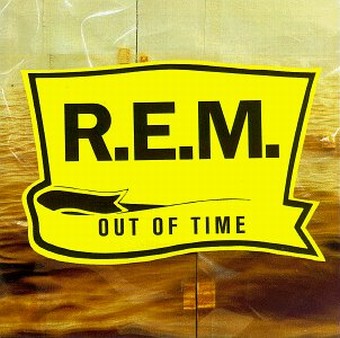
Out Of Time (REM) – Album Review

R.E.M's "Out Of Time" Was Issued In 1991 To Strong Reviews And Sales. It Included The Hits "Losing My Religion" & "Shiny Happy People".

R.E.M.'s "Out Of Time" Was Issued In 1991 To Strong Reviews And Sales. It Included The Hits "Losing My Religion" & "Shiny Happy People".

“Out Of Time” (1991) was to be R.E.M.’s second release for Warner, and it was also the record that led the band to levels of popularity that surpassed all their expectations. Of course, that also means that (as any band with a serious cult following that makes it to the big time) they were faced with the odious “what-have-you-done-to-us-your-true-fans”.  It didn’t certainly help that the disc included “Shiny Happy People”, a song considered one of the stupidest ever by a major band, and that the song was a transatlantic hit.

Leaving aside that composition (and how sickly catchy it is, I must add) the album is characterized by a tremendous world-weariness in terms of lyrics and motifs. Two songs use the expression “the world is collapsing”, and the adjective “hollow” is also featured in different compositions, and repeated as part of choruses. Besides, the one instrumental cut of the album goes by the name of “Endgame”. Continue reading

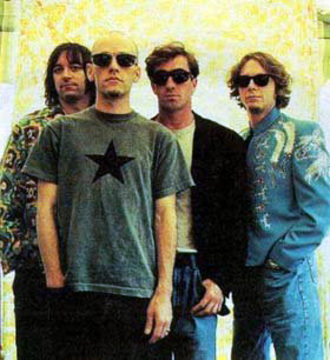
R.E.M. – General Introduction

A 90s Picture Of R.E.M. Featuring Michael Stipe, Peter Buck, Mike Mills & Bill Berry

A 90s Picture Of R.E.M. Featuring Michael Stipe, Peter Buck, Mike Mills & Bill Berry

We all know how pointless it is, but still we take part of conversations along the lines of “The best band ever was…” or “The best guitarist in history will always be…”. It is pointless, because there is not a parameter that we could agree upon to base the judgment on. Is the best guitarist the one with the best technique? The one with the fastest fingers? The one who plays the best solos? I recall the uproar caused by a list published in Rolling Stone detailing the “100 Best Guitar Players Ever” in which Johnny Ramone was in the Top 20. Some were enraged, and some defended the placement.

Still, I think that we take part of such discussions if only because we feel that championing our best-loved band is a way of bringing new converts in. And if you are over 30, I know that you have taken part of the “What’s the best band of the 80s?” discussion. And chances are, if you didn’t go for U2 you actually went for R.E.M.

Hailing from Athens (Georgia), the band fronted by Michael Stipe has had a career of note. It can be split in three sections. The first was the underground one. It started in 1982 with the release of the “Chronic Town” EP (on Hib-Tone), and the subsequent releases for I.R.S. This stage ended when they signed up with Warner in pursuit of broader international outreach in 1988.

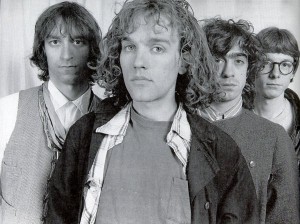
The Earliest Picture Of R.E.M. I Have Ever Come Across

The Earliest Picture Of R.E.M. I Have Ever Come Across

With Warner, they were to get that and become international superstars. The albums “Out Of Time” (1991) and “Automatic For The People” (1992) are indisputably the high points of their tenure at Warner, and the guys were to eventually renew their contract for about 80 million dollars (a record-breaking amount at the time). The year was 1996, and the next year they were to lose their long-standing drummer owing to health complications.
Continue reading

The Sixty One – Discover New Artists & Share Your Finds With Everybody

TheSixtyOne

Name: The Sixty One
URL: http://www.thesixtyone.com

A social site, the aim of The Sixty One is simple: to let you discover new music through your friends, and upon recommending new music yourself you can gain experience points and move up towards becoming a more prestigious (and hence influential) member of the site.

And if you are an artist yourself, you can submit your own work and have it rated by the rest of the community. The system is certainly useful in the sense that if you have the right contacts you can become noticed in virtually no time at all. Continue reading

Who Came First (Pete Townshend) – Album Review (Part 2)

Read the first part of this review here.

I haven’t talked a lot about the tracks that were contributed by fellow musicians yet. “Evolution” is Ronnie Lane’s all-acoustic take on a Small Faces track named “The Stone”, with him playing rhythm and Pete leading the way. For its part, “Forever’s Not Time At All” comprises mostly Billy Nicholls’ vocals and Caleb Quaye’s instrumentation – he handles bass, drums and guitars. “Forever’s Not Time At All”, incidentally, was a phrase inspired by Meher Baba. And the same applies to the coda of “Let’s See Action”, as “The Nothing & The Everything” was one of Baba’s teachings.

As far as Pete’s original compositions go, we have “Time Is Passing”, yet another song from the aborted Lifehouse project and one that did not surface as a Who recording until the remastered “Odds & Sods” saw release in 1999. A note on the Who’s version on that disc: what you listen to is only half the song. The other half (including a French horn and the full bass part) are missing, although the exactly opposite version of the song does exist, featuring the missing instruments and lacking the other ones. Some bootlegger even managed to combine the two mixes and come up with the “definitive” version of “Time Is Passing” by the Shepherd Bush’s combo.

The other original track is “Sheraton Gibson” a small ditty about hitting the road. Whether Pete alludes to touring or striking down the pathway of spiritual enlightenment is up to each listener… Continue reading

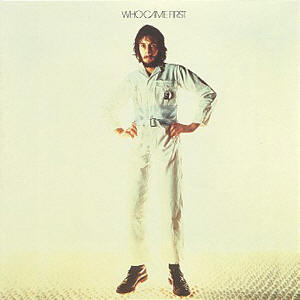
Who Came First (Pete Townshend) – Album Review (Part 1)

Pete Townshend As Depicted On The Cover Of His First Solo Record, Who Came First

Pete Townshend As Depicted On The Cover Of His First Solo Record, "Who Came First" (1972)

Pete Townshend’s love for Indian Avatar Meher Baba produced the critically-acclaimed Tommy album in 1969, but there was more to it. As a “Baba Lover”, Townshend was involved with other devotees in the production and internal release of albums that included not only music but also poetry readings. Those were to fall into the hands of bootleggers and be repackaged before too long, and that was the reason Pete’s record company offered him the chance to assemble an official disc. That disc was to be named “Who Came First”, it was issued in 1972, and it was to be Pete’s first release outside of The Who.

As I explained in the general introduction to Pete’s music, “Who Came First” was not really a “solo” album as a literal host contributed to the record. Caleb Quaye, Ronnie Lane and Billy Nicholls lent their interpretative skills to three of the nine tracks that were featured on “Who Came First”, and the album also included a painting by Mike McInnerney (he who had illustrated “Tommy”). Lyrics were likewise composed by other Baba lovers, with both McInnerney’s wife and Maud Kelly having writing credits of their own.

Pete provided some Who demos, a few original numbers and an adaptation of Baba’s Universal Prayer (“Parvardigar”). He also tackled Jim Reeves’ “There’s An Heartache Following Me”, as it was one of Baba’s favorite Western songs. The other was “Begin The Beguine”, and Pete did also cover it on another of those tribute albums. It didn’t make it into “Who Came First”, though.

The Who demos included “Pure & Easy” and “Let’s See Action”. The inclusion of “Pure & Easy” was phenomenal if only because a Who version was not issued until the “Odds & Sods” album almost 5 years later. The song was the genesis of the whole “Lifehouse” project, and its omission on the “Who’s Next” disc has always been mourned. As Dave Marsh said, it wouldn’t have “saved” the album itself. Rather, it would have “perfected” it. Continue reading

Pete Townshend – General Introduction

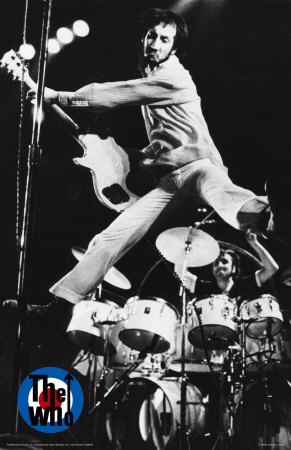
Pete Playing With The Who In 1972. His Leaps Were A Trademark Move Along With His Windmills.

Pete Playing With The Who In 1972. His Leaps Were A Trademark Move Along With His Windmills.

Notwithstanding the scope and quality of his solo output, Pete Townshend will always be remembered as the driving force behind The Who. The fact remains that Pete always had such an attachment and belief on the band that his solo career took a long time to start in earnest. That is, his first solo releases were not really that – both “Who Came First” and “Rough Mix” were large scale collaborations, as if Pete wanted to dilute by all means the fact that he was recording with someone who was not his beloved band.

Come the early eighties, though, his one love had become quite fragmented and the will to strike out on his own was strengthened. The death of Keith Moon was the obvious catalyst, but he also found it uneasy trying to communicate to a younger public. And one of his recurrent themes was always that of youth and its connection with ideals and dreams. All he could do was study the evolution of these themes along with his already-established fan base.

He did so in his first solo disc, “Empty Glass” (1980). It would prove to be his most successful offering, although the second one (“All The Best Cowboys Have Chinese Eyes”, 1982) was also praised critically, even when it sometimes sank under its own pretensions.

Pete then released the first of many collections of demos. Those “Scoops” as he were to name them were invariably intoxicating to fans, for two reasons. The first was that Pete played every instrument himself, and he did so suiting the style of each member of The Who. The second was that his vocal delivery was always very removed from that of Roger, not only in terms of range but mainly in terms of interpretative force. Roger was always a ballsy performer, and his energy was to take some songs such as “Who Are You” into territory different to the one Pete had originally conceived. Continue reading